

The short version
Which grade to specify
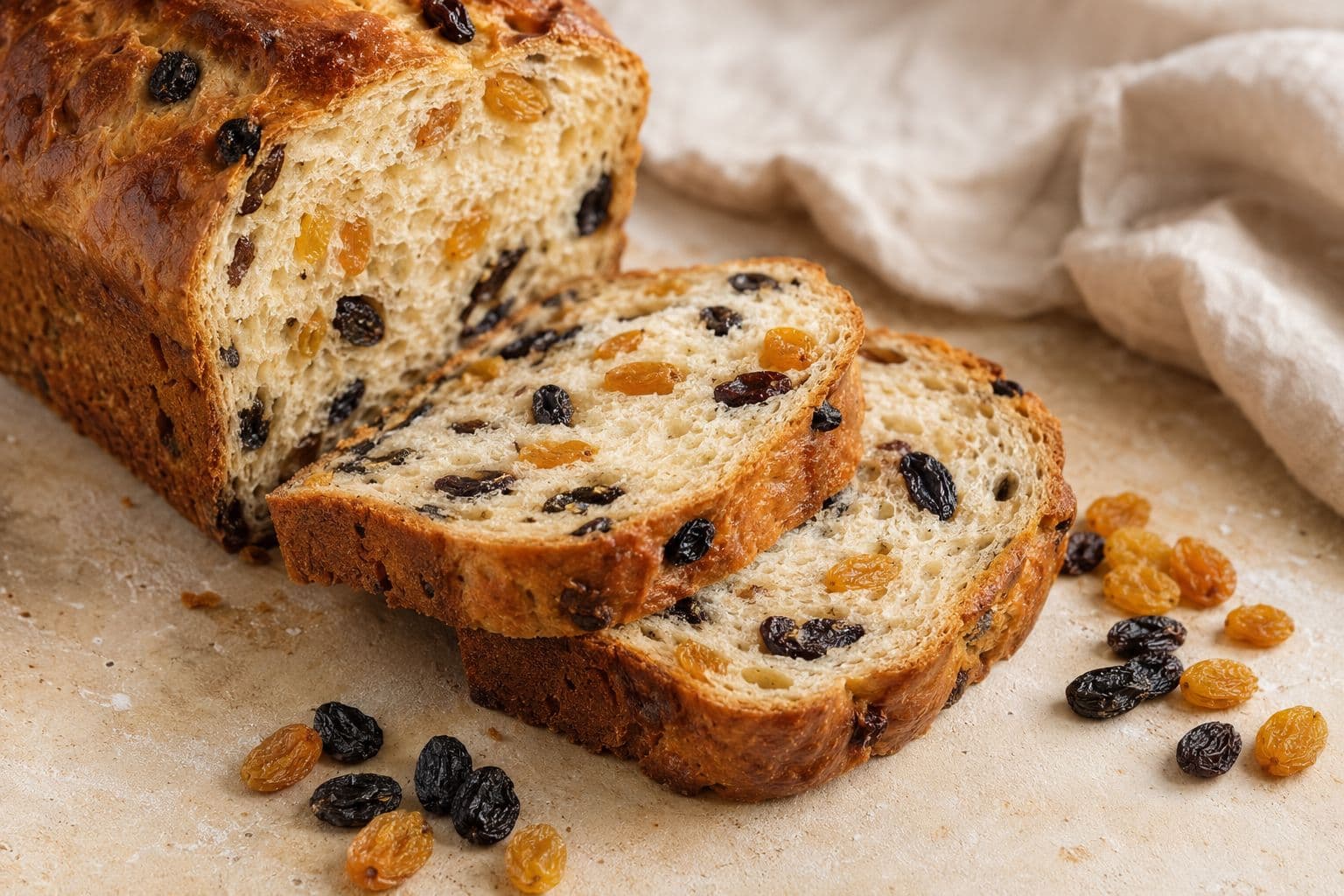
Work backwards from the finished product. On a pale crumb the fruit is on show, so colour uniformity carries the loaf and jumbo golden at 16-20 mm is the honest choice. On a date cake, a spiced bun or a chocolate muffin nobody sees the fruit at all, and paying golden money for it is waste. Grade A black does the same job for less.
Rusk is its own case. The second bake drives out moisture and browns everything on the tray, so grade A golden survives it and premium jumbo is money the oven will flatten. Cookies are the opposite problem. A 20 mm raisin in a 4 mm cookie tears the dough as it sheets, so either chop the fruit or drop a size band.
For cake manufacturing at volume the calculation shifts slightly, because a unit turning out four hundred tea cakes a day is buying appearance consistency across a whole batch rather than a showpiece loaf. Golden grade A does that job at a working rate, and it is what most cake units settle on once they have tried both.
Size and colour bands for both varieties are set out on bulk golden lots and black raisins in bulk. Tell us the product and the crumb colour and we will suggest a grade rather than quote the dearest one on the list.
Indicative bakery selection guide
What breaks when the grade drifts
The complaint we hear from bakeries is almost never about quality in the abstract. It is that this month's carton behaves differently from last month's, and the head baker has to adjust a recipe that was working perfectly well.
Most of it traces back to two variables: moisture and size uniformity. Both are graded, both drift when a supplier quietly substitutes a lot, and neither is visible in a photograph of a bowl.
Handling at production scale
Five things make raisins behave the same way in every batch. None of them cost anything.
Sulphur dioxide, and what goes on your wrapper
Golden and green raisins carry sulphur dioxide, listed as E220, as a permitted preservative. That is what holds the amber and the pale green through eight months of storage instead of letting the fruit go brown in the carton. Black raisins are sun-dried and do not carry it.
This matters to a bakery in a way it does not matter to a household, because you print wrappers. If your cake or bread leaves the counter in a printed pack, the ingredient declaration has to reflect what is actually in it. Ask us for the declaration in writing at quotation stage and get it onto artwork before the print run, not after twenty thousand wrappers are stacked in your store.
A bakery that wants to keep the declaration off the label altogether has one route, which is black, and the bake has to be dark enough to carry it. We would rather say that plainly at enquiry than sell you golden and let you discover it at labelling. Confirm the final wording with whoever handles your packaging compliance.
Packing that suits a bakery floor
Bakeries buy small cartons for a practical reason. Once the liner is open, the carton starts trading moisture with your kitchen air, and a bakery kitchen is humid for most of the working day. A 25kg carton opened on the first of the month is not the same material on the twentieth.
Buy the format one shift or one week finishes. For a single outlet with a cake counter that is 5kg. For a production unit running daily bread and cake lines it is 10kg. Above that you are buying storage risk along with the discount.
If you do take a bigger carton
Decant into a sealed food-grade bin on day one and close the liner after every draw. Keep the carton off the floor and away from the oven wall, which is the hottest and most humid corner of most bakeries. The full list of stocked formats, liners and batch marking is on the packing formats we run.
How the bakery year collides with the raisin year
Bakery raisin demand builds from September, runs hard through the Christmas fruit cake and plum cake window across November and December, then falls away in January. Wedding-season cake orders hold it steady into February.
The raisin market moves the other way. September to November is the firmest stretch of the year, because sweet units, gifting trade and general trade are all drawing on the same finite stock from a crop that finished drying back in April.
So a bakery that takes plum cake bookings in August and buys its fruit in November has taken the price risk onto itself. Fix grade and quantity when you take the booking, even if you take delivery in two lots. The supply mechanics behind that are on how the raisin year moves, and the soak, dose and prep detail by product is in our guide to baking with raisins.
Buying bulk raisins for bakeries: rates, MOQ and freight
Minimum order for bulk raisins for bakeries is 15kg, and you can mix grades to reach it. We quote a named grade at a named quantity, ex-Tasgaon, freight separate, and hold the rate for 48 hours because the market moves under us as much as it moves under you.
Before the first order: samples and vendor setup
Almost every enquiry we get for bulk raisins for bakeries starts the same way. Somebody has been let down on consistency by their current bakery raisin supplier and wants to see material before anybody talks about rate. That is the right order to do it in.
We send 250g of the exact grade with a grade sheet stating size band, colour, moisture and packing. It is charged at cost plus courier and adjusted against your first bulk order.
Do not judge it in the bowl. Bake it. A raisin that looks correct dry can still behave differently in a batter, and one trial loaf tells you in an hour what no photograph ever will. If the sample does not match the sheet, say so, because that is the entire point of sending a sheet with it.
Bakeries onboarding a new supplier tend to ask for the same set at the same time: GST details, an FSSAI licence copy, bank details and the specification in writing. Ask for it at enquiry stage rather than after the purchase order is raised. Send variety, grade, monthly quantity and destination city to the wholesale enquiry form and you will normally have a number back the same working day, or go straight to today's quoted rate.
If you would rather handle the material before committing to a carton, a sealed 1kg golden pouch is the same lot in retail packing.
Frequently asked
Golden raisins for anything with a pale crumb, because they keep their amber colour through the oven where black darkens further and disappears. Jumbo golden for premium fruit loaves and plum cake, grade A golden for daily production. Use grade A black only where the bake is already dark, such as date cake or spiced buns.