

The short version
Which grade for which sweet
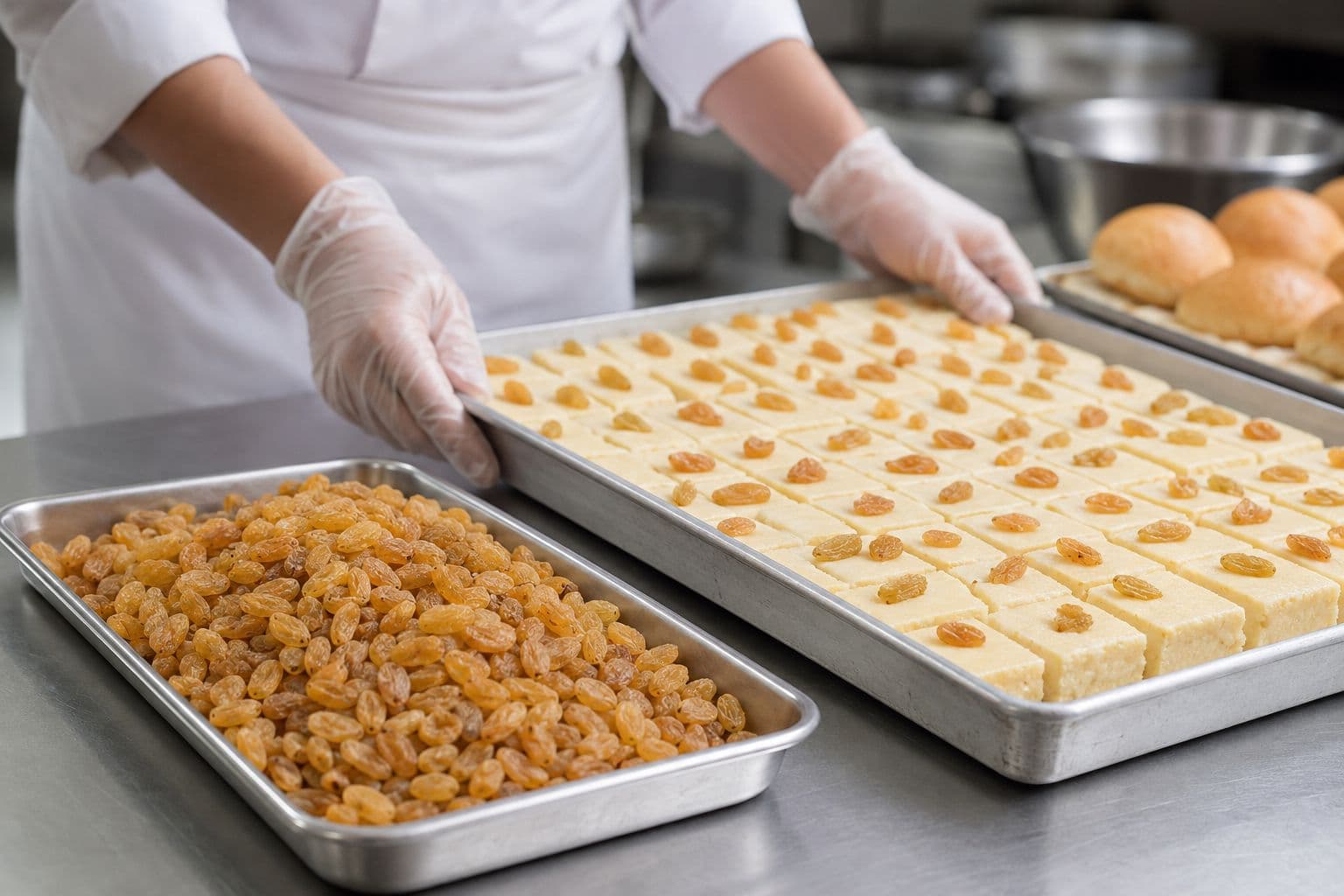
In mithai the raisin is either seen or it is not, and that one question settles the grade. In a besan laddoo, a dry-fruit roll or a nut-based sweet the fruit sits on the surface or just under it, and a shrivelled 10 mm piece reads as a mistake. Grade A black at 12-16 mm is what actually shows.
Cook it into a halwa, a sheera or a mawa filling and nobody can tell one grade from another once the fruit has plumped in fat and sugar. That is where grade B and commercial black earn their keep, and where a sweet unit saves real money across a season without a single customer noticing.
Green is the exception, and it is a colour decision rather than a taste one. The size and colour bands for both sit on the black grade ladder and long seedless lots in bulk.
What sweet units order, by product
What hot ghee tells you about a lot
Almost every sweet kitchen puts raisins through ghee before they go into the mix. Ten seconds at a medium flame and a sound lot puffs, goes glossy and lifts off the base of the kadhai. That is the check most karigars already use, and it reads moisture better than anything you can do by eye.
A lot carrying too much moisture spits when it hits the fat, foams the ghee and darkens at the edges before it has puffed. A lot that was over-dried, or that has sat a year in a hot godown, does not puff at all. It stays small and hard in the kadhai, and it stays hard in the finished sweet, which is the version the customer actually complains about.
If a fresh carton behaves differently in the kadhai from last month's, that is the grade drifting and not your karigar. Ask which lot it came from before you change anything else on the bench.
Black raisins in a pale base
Black carries the most sugar of the three varieties and the most colour with it. Fry it and fold it into a besan or wheat base and nothing shows. Simmer the same fruit in milk for twenty minutes and the skin gives up a purple-brown tinge that spreads through rabdi, basundi or a white barfi mix.
That is not spoilage and it is not a defect. It is what a sun-dried skin does in hot liquid over time. The trade answer is unglamorous: keep black for anything already dark or nut-based, and use green grade B where the base has to stay clean and the fruit has to stay whole and countable.
Golden works in a pale base as well, and it costs more, so most units reserve it for gifting lines and hamper sweets where the box is doing the selling rather than the recipe.
Three things that cost a sweet unit an account
None of these show in a photograph of a bowl. They show on the counter, three weeks after somebody accepted the lot without opening a carton.
Check it the way you check khoya
Open one carton from the consignment, not the top one, and draw from the middle. Squeeze a handful. It should fall apart when you open your palm, not hold as a lump. Look for stems, colour outliers and pieces that are visibly smaller than the band on the grade sheet, then fry ten in ghee. Five minutes of work at intake saves a season of arguments.
The festive calendar runs against the raisin calendar
A sweet unit buys against a demand curve that sits almost exactly opposite the raisin supply curve. That is the whole procurement problem in this trade, and no amount of negotiation fixes it in October.
Raisins are made in one window, February to April. Rates are softest then, and that stretch is also the quietest part of the mithai year. Demand for raisins for sweets builds through Rakhi and Ganesh Chaturthi, holds through Navratri and Dussehra, peaks at Diwali, then runs straight into the wedding season from November into February. By the time you need the most material, the market has drawn down half a year of stock and the rate says so.
Demand against rate through the year
Buying for a whole season
Two workable approaches. Buy in the soft window and hold, or fix grade and supplier early and take delivery in instalments against an agreed quantity. Units with their own cold storage do the first. Units without it do the second, and they still buy better than a unit ringing round for a spot rate in the third week of October.
Tell us the monthly draw and the festive spike as two separate numbers, because they need different planning. A unit running 60kg a month and 400kg in the Diwali fortnight is a different supply problem from one running 200kg flat, even if the annual tonnage matches.
What we can hold, and for how long, depends on the crop year. We say so at the time rather than promise a tonnage in July and disappoint in October. The reasoning behind the seasonal pattern is on why rates climb into Diwali.
Packing, and the godown problem
Sweet units work in big batches, so raisins for sweets go out in 10kg and 20kg cartons, with 25kg where the daily draw justifies it. Every carton is lined with food-grade material and batch marked, so a consignment traces back to a lot and a packing date.
The godown matters more in this trade than in most, because a sweet unit's store is usually warm and often shares a wall with the kitchen. Keep cartons on pallets, off external walls, and out of the room where the kadhai runs all day. Through a Maharashtra monsoon an uncontrolled store will clump a carton that arrived perfectly loose.
Clumping is a moisture symptom rather than spoilage. A clumped carton normally breaks up and works, but treat it as a warning about the room. Conditions, stacking and realistic shelf life are set out on godown conditions and shelf life, and strict first-in-first-out against the batch marks is worth enforcing on the floor rather than leaving to whoever opens the nearest box.
Ordering raisins for sweets: MOQ, rates and samples
Minimum order is 15kg and you can mix grades to reach it. Every quotation names variety, grade, quantity and packing, is ex-Tasgaon with freight separate, and holds for 48 hours.
Sample first, then commit
Before a first order we send 250g of the exact grade with a grade sheet giving size band, colour, moisture and packing. Charged at cost plus courier and adjusted against your first bulk order. Put it through the kadhai rather than judging it in the bag, and make one batch of whatever you sell most of.
Send variety, grade, monthly quantity and festive quantity to the bulk quote form, or ask for a rate against your named grade if the grade is already settled. To try the material at home scale, a sealed 1kg pack of grade A black comes from the same lots, and where each variety is traditionally used covers the kitchen side of the choice.
Frequently asked
Black for most of them. Grade A black where the fruit is visible in a laddoo, panjiri or dry-fruit roll, and grade B or commercial black where it cooks into a halwa or mawa filling. Green grade B is used in kheer, rabdi and pale barfi, because black gives up colour in hot milk.