

The region
Sangli raisins, from the Tasgaon belt
Sangli district in Maharashtra, and Tasgaon in particular, produces the large majority of India’s raisins. The grapes, the drying sheds, the sorting halls, the cold storages and the market yard all sit within a few kilometres of each other, which is why a lot made here is more consistent than one made from grapes trucked somewhere else to dry.
Raisinly Farm is based in Tasgaon. We buy lot by lot as stock comes off the racks, grade it, and pack for two kinds of buyer: households who want a good 500g pouch, and businesses who need 25kg cartons of one consistent grade.
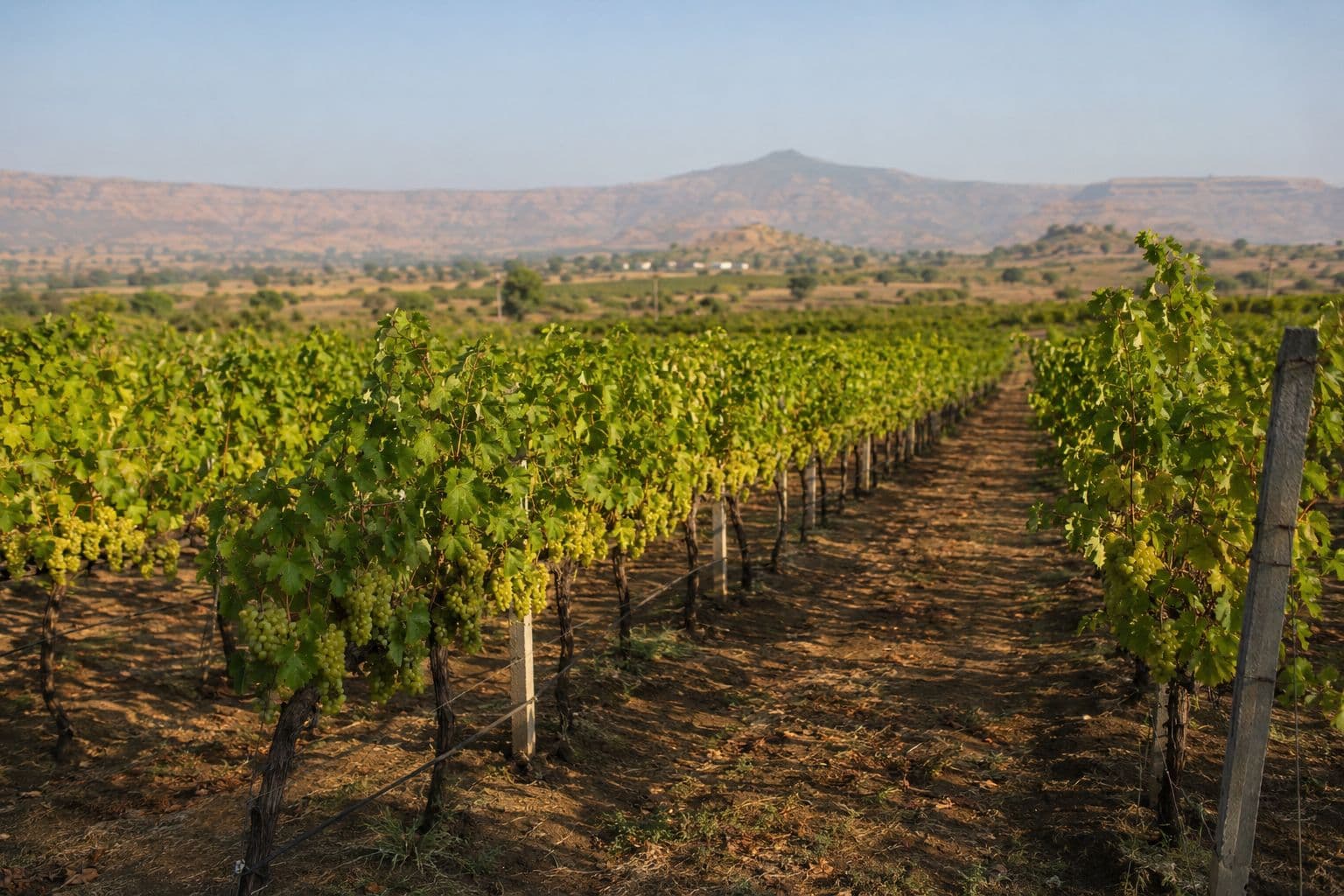
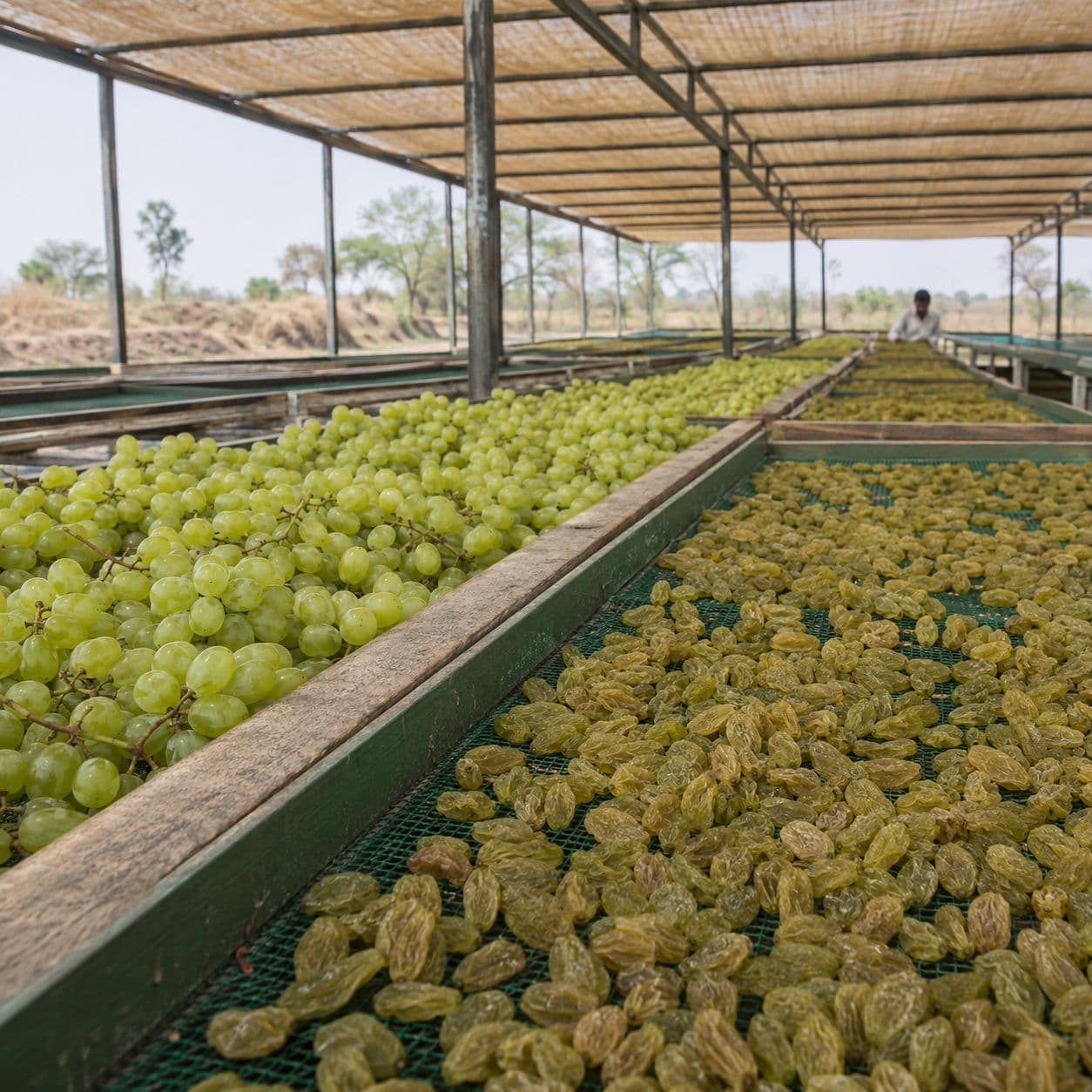
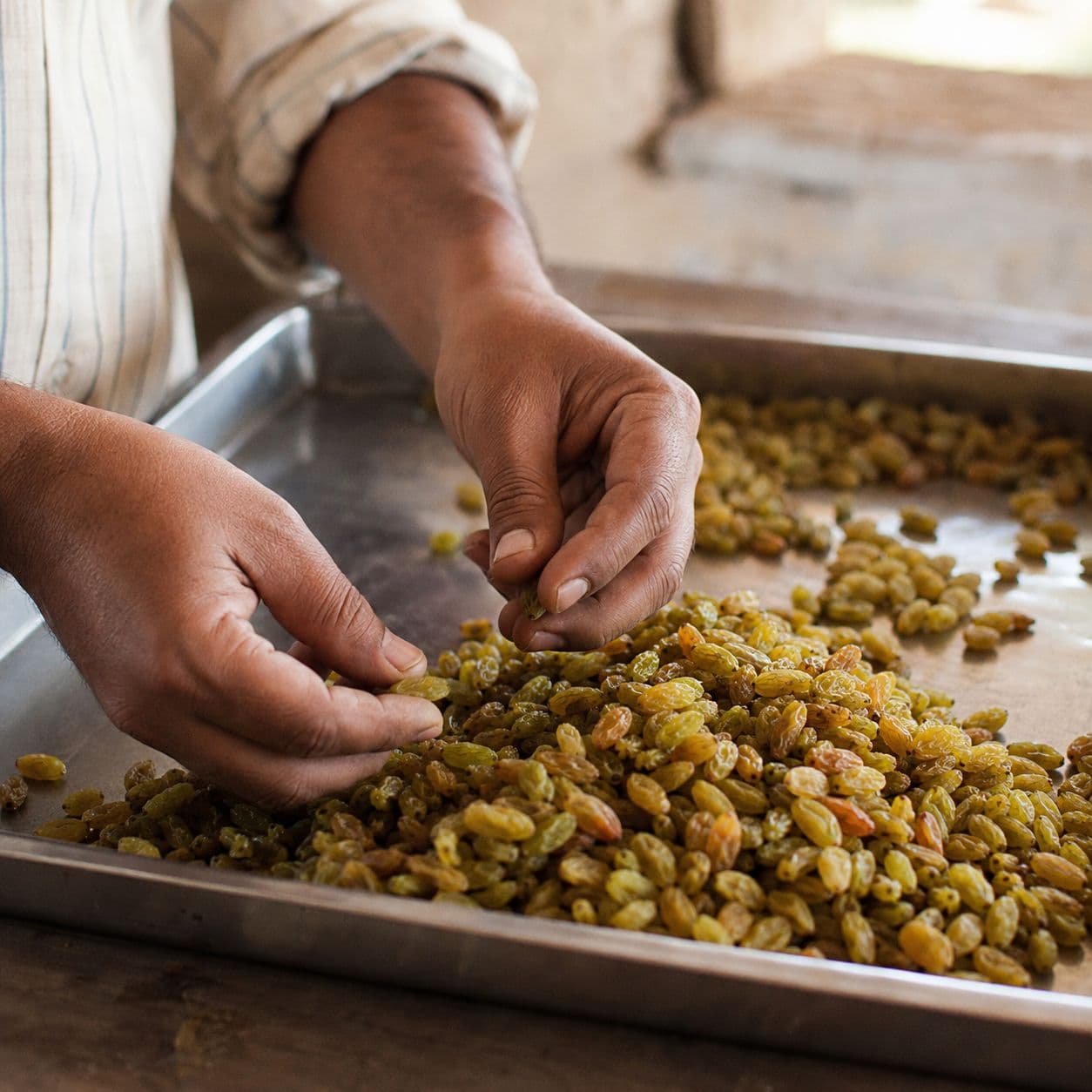
Tasgaon, Sangli
where we buy and pack
February to April
harvest and drying season
12-16 days
on the drying racks
3 varieties
black, green, golden
Why this belt
Three things line up here: large Thompson seedless acreage; a dry, warm February-to-April window that suits both shade and sun drying; and decades of accumulated processing capacity.
The weather is the part nobody can copy. Raisin making needs a run of warm days and low humidity in the fortnight straight after picking, and this belt gets it nearly every year. Grapes ripen well in plenty of places in India. What those places do not get is two clean weeks to dry without rain, and rain in the middle of drying is the difference between a premium lot and a lot that sells for whatever anyone will pay.
Raisin quality is decided in those two weeks. A region with the sheds, the labour and the cold storage already standing produces steadier lots year after year, which is why most Indian raisins, whatever brand is printed on the pack, pass through this small geography. Ask a dry-fruit wholesaler in Delhi or Chennai where the kismis on their shelf came from and the honest answer is usually Tasgaon, one or two hands back.
The process itself is described step by step in how raisins are made.
How we source
Where in Sangli the crop actually comes from
Sangli district is a good deal bigger than its raisin trade. The raisin part of it is compact, and if you have driven it once you can picture the whole thing.
Tasgaon taluka is the middle of it. Vineyards run thick along the Krishna through Palus and Miraj where water is easy, thin out heading east through Kavathe Mahankal and Khanapur, and get sparse again out towards Jat and Atpadi where rainfall decides everything. Vita, Kadegaon and the villages between them carry sheds too. Drive any road out of Tasgaon in March and you will pass wire racks under shade net every few hundred metres, then a sorting hall, then a cold storage, then more racks.
Nashik and parts of Solapur grow and dry as well, and the belts trade with each other constantly, so stock crosses district lines both ways in a normal season. What this corner has that the others do not is density: the sheds, the sorting labour, the chamber space and the market yard sit inside a short drive of one another, so a lot can be dried, graded, sold and put into cold storage without ever going more than thirty kilometres. That is why where India’s raisin production sits is a much shorter list than where India’s grapes grow.
For a buyer, an address inside the district tells you very little on its own. Plenty of firms with a Sangli or Tasgaon address are trading desks that never handle a rack, which is fine and normal, and plenty of good stock is sold by people three villages off the highway with no signboard at all. The district name is a starting point, not a guarantee, and what makes Indian raisins their own product has more to do with the drying fortnight than the pin code.
The season in the belt
Harvest opens in the second week of February across most of the belt and runs into April. Bunches are picked, dipped in a potassium carbonate and oil emulsion that breaks the waxy bloom on the skin so moisture can escape, then hung on wire racks inside shade sheds. From that point the weather is in charge.
Twelve to sixteen days on the racks, give or take, depending on how the week goes. Green lots stay under shade the whole time so they hold their pale colour and firm bite. Black lots take open sun and darken as the sugar concentrates. Golden comes off riper fruit, dried slower, with a sulphur treatment to hold the amber. Roughly four kilos of grapes make one kilo of raisins, which is why a bad drying week hurts twice: it costs weight and it costs grade at the same time.
By May the racks are empty and the halls are busy instead. Destemming, size grading over sieves, hand sorting, weighing into 15kg and 25kg cartons. What gets decided in the sorting halls in May and June is what the country is eating in December.
The market mechanics behind this are set out in raisin market price, and the grades traded here are listed in raisin grades.
Who owns the raisins before we do
The belt runs on four kinds of seller, and we buy from three of them.
Growers with their own sheds sell their lots themselves, usually inside the season and usually in one or two goes because they need the money back. Larger growers and small processors dry for other farmers as well as for themselves, and sell already graded stock. Commission agents at the market yard sell on behalf of growers and take their cut from the transaction. And the cold storages hold lots on account for whoever paid for the chamber space, releasing them through the year as the owner instructs.
We buy from growers, from processors and from cold storages inside the belt. We do not buy through agents in other states and we do not deal in imported stock. What we will not do is claim that every kilo came out of a farmer’s hand into ours, because it did not. Some lots we take in March straight off the racks. Others we take in September out of a cold storage twenty minutes away, from a lot we already saw in March. Both are ordinary, honest ways to buy raisins. Only one of them is what the phrase direct from farmer actually means, so we describe the model rather than borrow a phrase we cannot stand behind.
Search for wholesalers of raisins in Sangli and you will find plenty of names, most of them genuine traders who have been doing this longer than we have. The thing worth checking is not the address. It is whether the seller will name a grade, tell you which lot it came from, and stand behind a sample once the carton opens 900 km away. What a bulk order looks like from enquiry to delivery sets out how we handle that end of it.
How a lot gets assessed before we buy it
Buying raisins is done with your hands, not off a specification sheet. A sample bag comes out, gets tipped into a tray, and the same six things get checked every single time.
- Length and evenness. Green and golden get measured. Around 18-22 mm across the bulk of the sample is what premium select and jumbo mean in practice. Three different sizes in one handful means the sieving was rushed.
- Colour through the sample, not off the top. The top handful of any bag looks its best. We dig to the bottom of the sack.
- Moisture by feel. Squeeze a fistful and open your hand. It should break apart. Anything that holds as a lump is carrying water we would be paying raisin rates for.
- Smell. Grape and sugar is right. Sharp, fermented or musty means the lot sat wet somewhere, and a lot never recovers from that.
- Trash. Stalk pieces, grit, split berries, immature fruit. Every gram of it is weight billed at the price of raisins.
- Stickiness. Some sugar bloom in black lots is natural and harmless. Heavy stickiness right through the sample means the stock will fuse into a block in a Chennai godown by June.
Lots that pass get bought and then kept separate. We do not blend two lots to make up a quantity under one grade name, because the moment you do that the pack stops being repeatable, and a bakery taking 200kg a month spots it inside one delivery. The same checks, written for somebody standing over a pack in their own kitchen, are in checking a lot with your hands.
What the belt makes, and the grade names traded here
One grape family does nearly all of the work. Thompson seedless and its local selections, Sonaka and Manik Chaman among them, are what the sheds fill up with. Three quite different products come out of that one crop, and the thing that separates them is not the vine. It is what happens in the fortnight after picking.
Green stays under shade the whole time and keeps its pale colour and firm bite. Black takes open sun and darkens as the sugar concentrates. Golden comes off riper fruit, dries slower, and takes a sulphur treatment, E220 on a label, to hold the amber instead of letting it go brown. Same vineyard, three fortnights, three products.
Now the part buyers get caught by. Those grade names are trade vocabulary, not a legal standard. Premium select, jumbo, grade A, commercial: each means something real inside one seller’s ladder, and there is no authority making two halls in Tasgaon use the word the same way. A jumbo from one processor can sit below another processor’s premium select on the sieve.
Which is why serious buyers ask for a measured size band, a moisture feel and a sample rather than accepting the adjective. We publish the specifications we actually supply against so a word on a quote can be checked against something. If you are still deciding which of the three you want rather than which grade, the three varieties compared side by side is the quicker read.
What cold storage does, and what it cannot fix
The country makes raisins in ten weeks and eats them over fifty-two. Cold storage is the bridge, and this belt has a great deal of it.
Graded stock goes into 15kg and 25kg cartons with food-grade liners and into chambers held cool through the year. Kept properly, a lot comes out in November close to how it went in during May. Colour holds, texture holds, the berries stay loose in the hand. That is the only reason a decent green kismis exists in January at all.
What a chamber cannot do is improve anything. A lot that went in wet comes out wet and usually worse, because moisture plus warmth is exactly what starts fermentation and mould. Browning at the tips in April is still browning at the tips in October. Storage preserves the grade it was handed. Nothing more than that.
So we care where a lot spent the monsoon almost as much as we care how it dried. Stock that sat in an open shed through July and August in this humidity is a different product from stock that sat in a chamber, whatever a grade sheet says about it. Our retail pouches carry a packing date so you can see when the stock was actually made up, and keeping raisins well at home comes down to the same three things a chamber does: cool, dry, sealed.
The Tasgaon kismis market and how a rate is set
Tasgaon runs one of the busiest raisin markets in the country, and in season it is loud. Lots arrive in sacks by tractor and tempo, get spread out for inspection, and trade through commission agents. Buyers walk the rows, put a hand into each sack, decide in about forty seconds, and rates get called on the spot.
There is no single kismis rate in Sangli on any given day. There is a rate for a named grade, on that day, for lots of that quality, and it can shift within one morning if a large buyer clears the good stock early and leaves the rest of the yard bidding on what is left. In a quiet stretch rates move weekly. Around Diwali they move daily. Anyone publishing a fixed annual price list for raisins is publishing a number that stopped being true some months ago.
What we do instead is quote the day’s rate against the grade you name and hold it for 48 hours, which is long enough to decide and short enough to be honest. Households buying a pouch at a time do not need to track any of this. Our retail pack prices for the season are set and shown live, and they do not change between one city and another.
Packing and dispatch out of Tasgaon
Everything leaves from here. Retail pouches are filled in short runs on the packing bench, sealed, dated and boxed, so made-up stock is not sitting on a shelf for months waiting for an order to arrive. Dispatch is within 24-48 hours. Maharashtra addresses take 2-4 days and the rest of India 4-7.
Bulk moves differently. Graded stock goes into food-grade liners inside 5kg, 10kg, 20kg or 25kg cartons, marked with variety, grade, lot and packing date, and travels by transport to Bengaluru, Chennai, Hyderabad, Kochi, Ahmedabad and Delhi NCR. Minimum bulk order is 15kg. Buyers within driving distance sometimes collect ex-Tasgaon themselves, which takes freight out of the quote entirely.
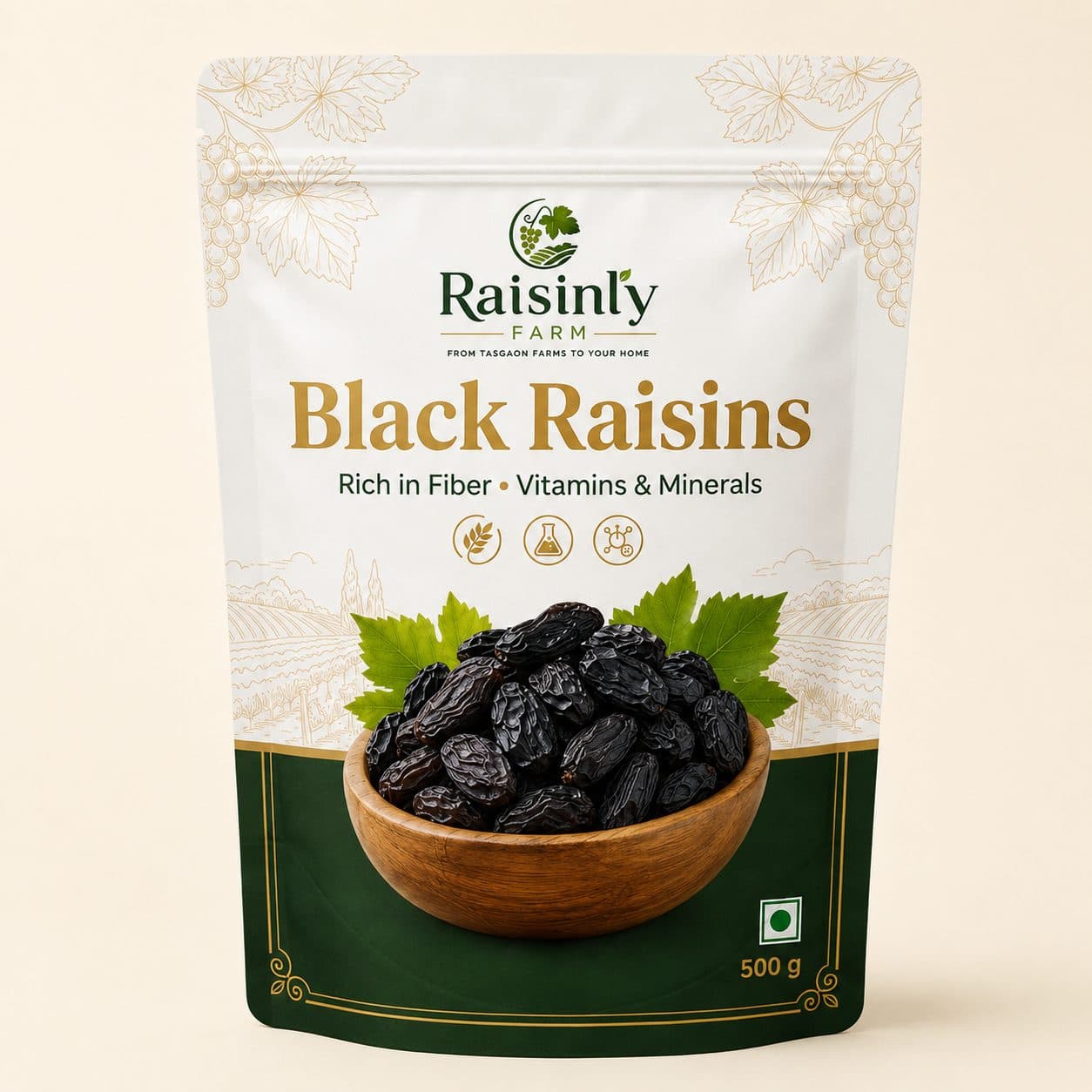
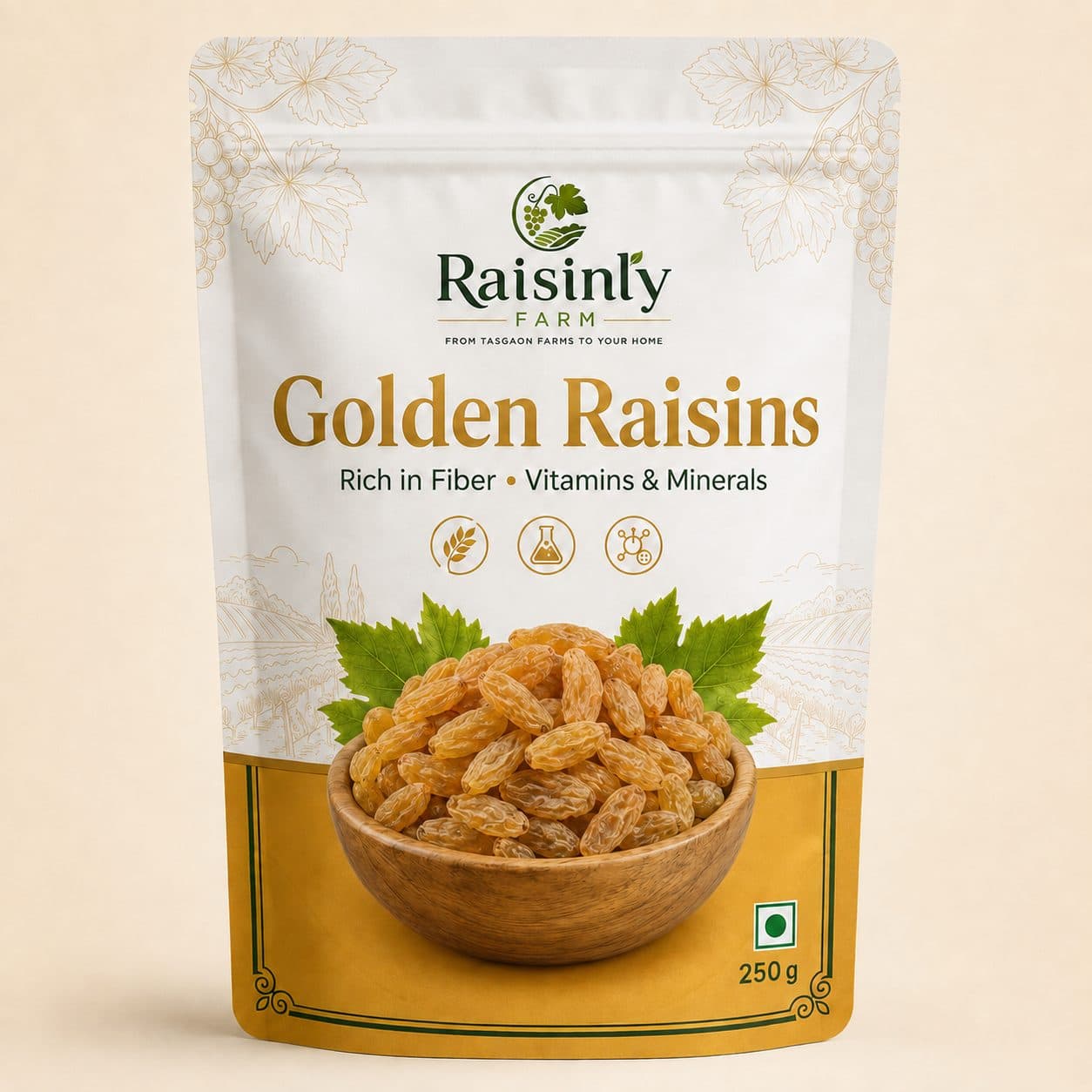
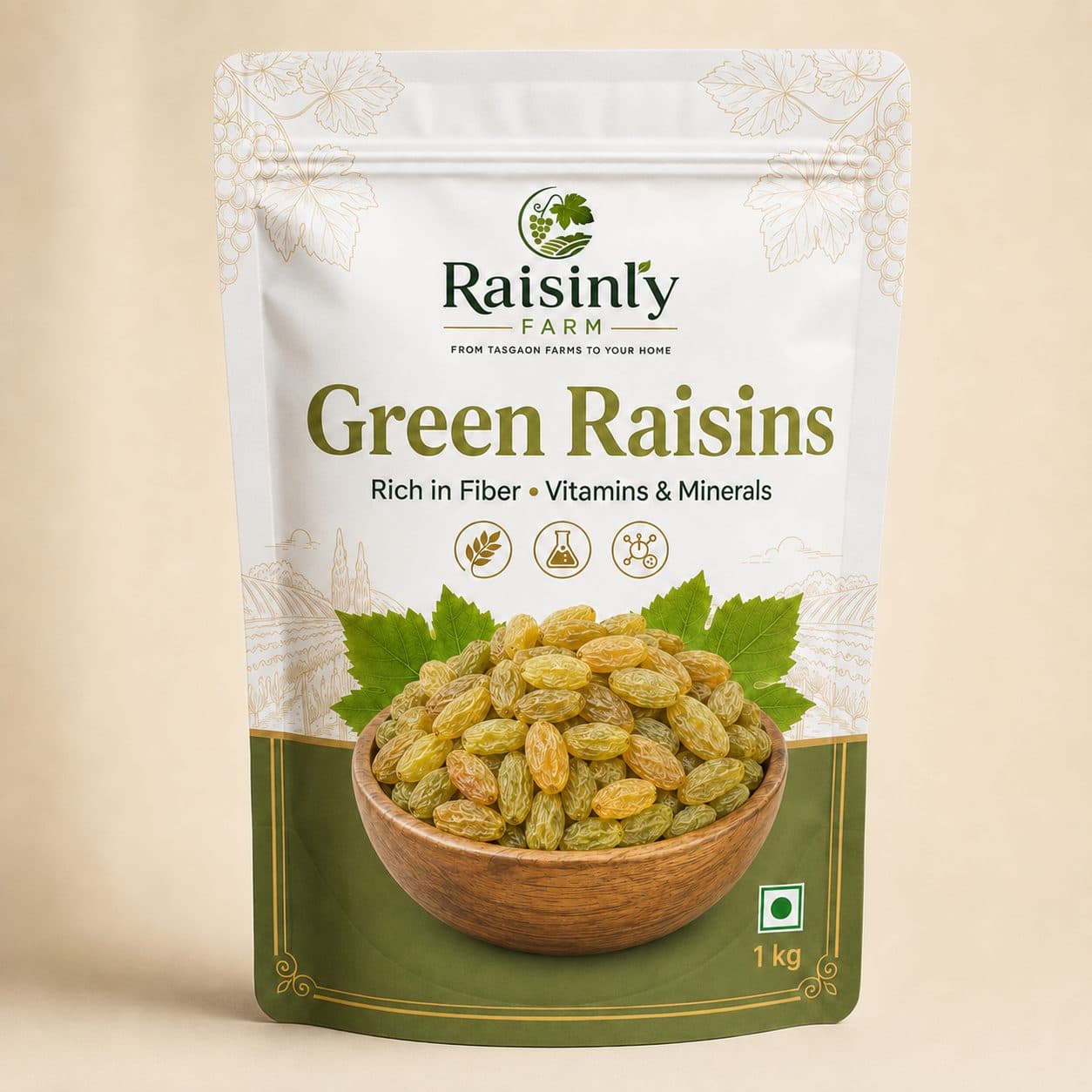
Three varieties leave this room, all from the same Thompson seedless grape and the same ten-week season: sun-dried black kismis, long green seedless and amber jumbo golden. Same belt, same crop, three different fortnights on the racks.
Two ways to buy out of the belt
Same lots, same grading bench, two completely different transactions. Households and businesses are not badly served by the same arrangement, so we do not pretend they are.
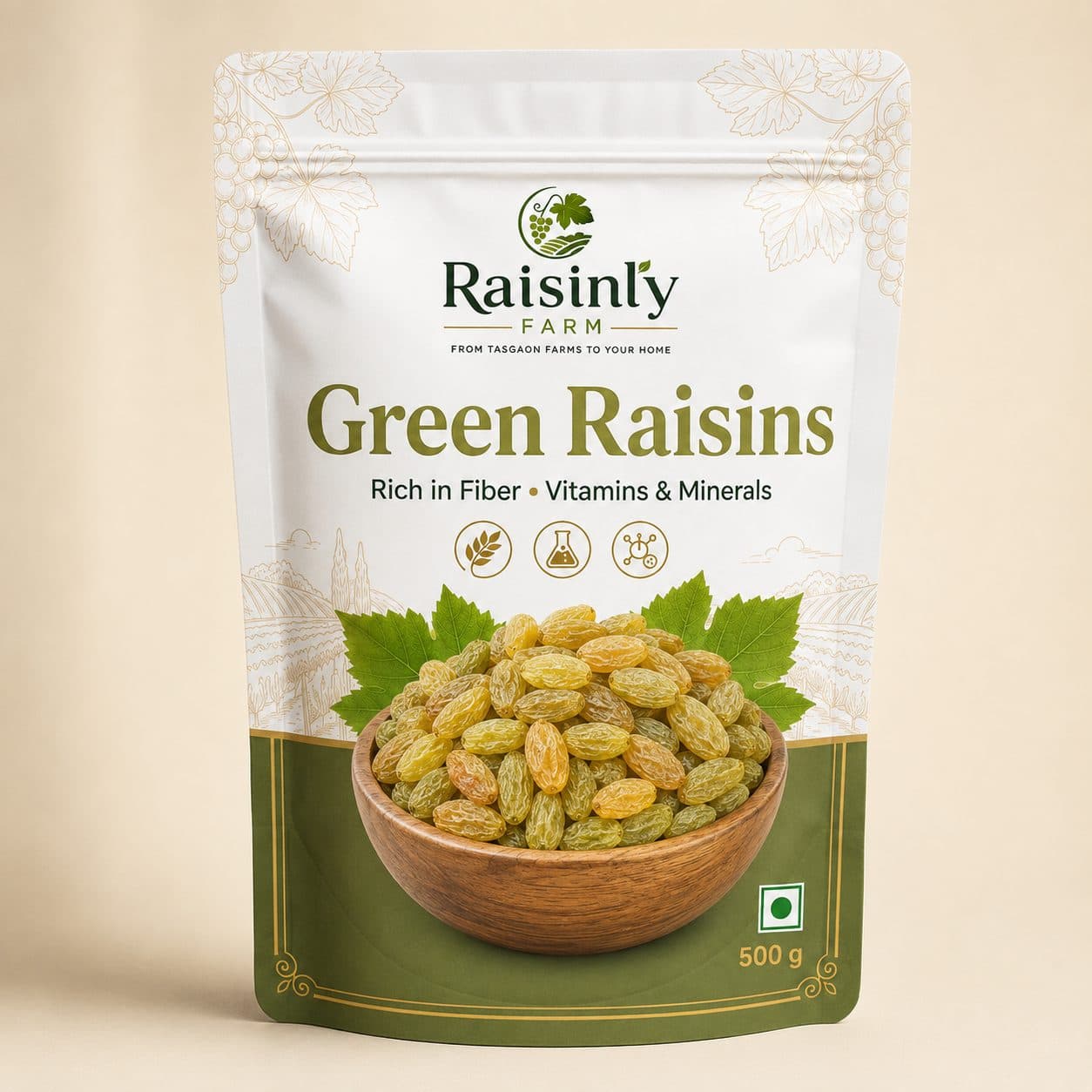
Retail is fixed and simple. Sealed 250g, 500g and 1kg pouches, one price list for the whole country, taxes in, free shipping above ₹999 and a packing date on every pack. There is no Sangli discount and no Mumbai loading, because a courier consignment from Tasgaon costs us roughly the same wherever it goes. Every pouch we currently pack is on one page with its live rate.
Bulk works the way the trade works. Per kilogram, ex-Tasgaon, against a grade you name, minimum 15kg, quoted on the day of enquiry and held for 48 hours. A 250g sample of that grade goes out first, charged at cost and adjusted against the first order, because nobody should commit a season’s requirement to a description. Stock travels in food-grade liners inside cartons marked with variety, grade, lot and packing date, and the carton and liner options we run cover 5kg through 25kg depending on how your floor handles it.
What we will not do is sell 15kg as fifteen retail pouches at retail prices, or quote a bulk rate without knowing the grade. Both happen often enough in this trade to be worth saying out loud. If you are a bakery, a mithai kitchen or a dry-fruit shop buying monthly, the quantity belongs on a wholesale quote, and the sample should reach you before any money moves.
From this season
Buy raisins from Sangli
Questions about the region
Sangli district, and Tasgaon in particular, has the grape acreage, the dry February-to-April weather, and the drying sheds, sorting halls and cold storages that raisin making needs. Concentrating all of it in one place produces more consistent lots than shipping grapes elsewhere to dry.