

Retail prices
Kismis price per kg and pack rates for 1 kg, 500 g and 250 g
Raisinly Farm retail packs run from ₹229 to ₹999: black, green and golden raisins in 250g, 500g and 1kg pouches, inclusive of all taxes. The 1 kg kismis price is the lowest per kilo of the three sizes, and orders above ₹999 ship free anywhere in India. Prices below are live from our store. The kismis price you see is the price you pay, in Mumbai or in Kanpur. There is no city rate card.
Last updated 1 August 2026 · Retail prices, inclusive of all taxes · Wholesale rates quoted separately
Kismis price by pack size: 1 kg, 500 g and 250 g
Effective price per kilogram is shown under each pack price. Struck prices are MRP.
Raisins price per kg: what you actually pay
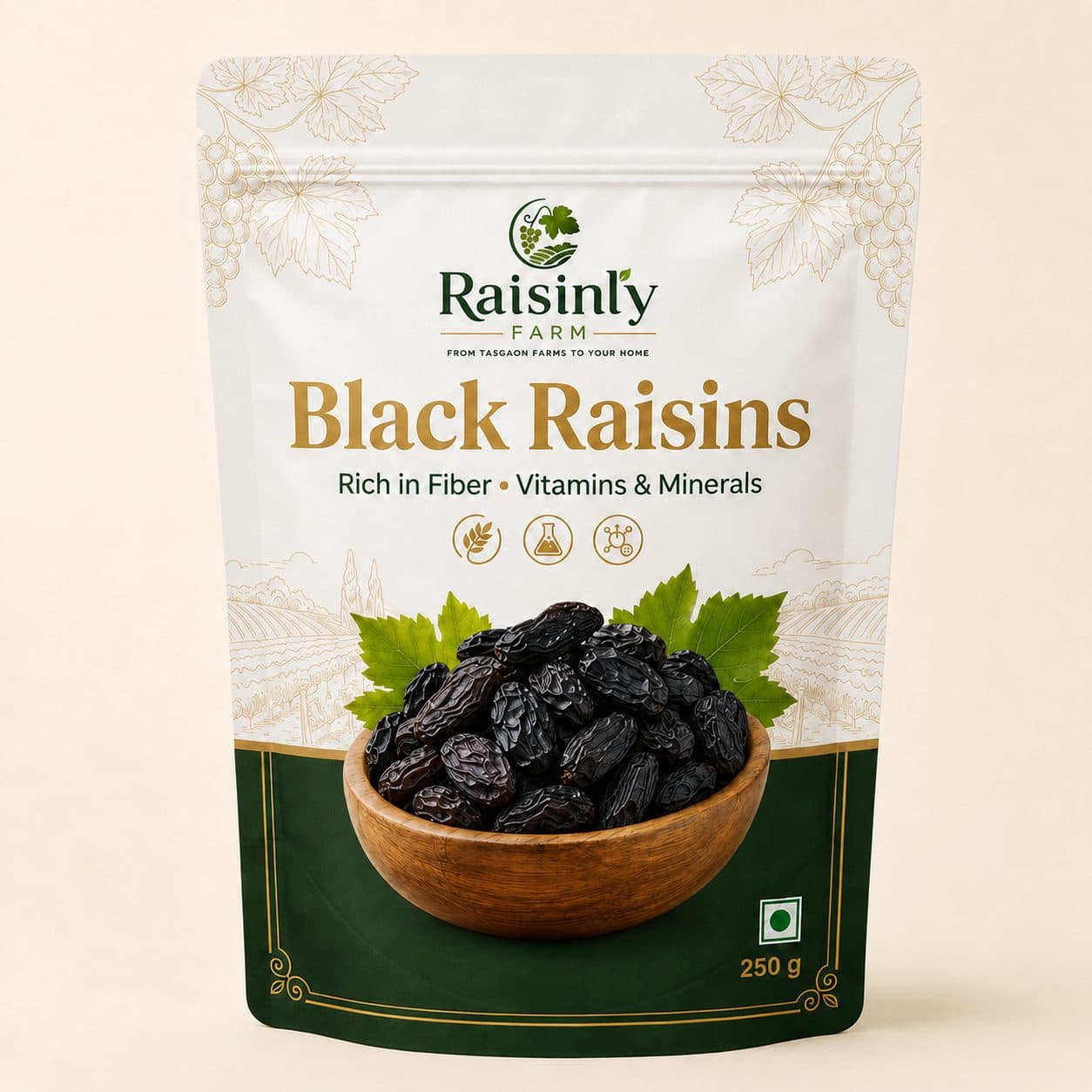
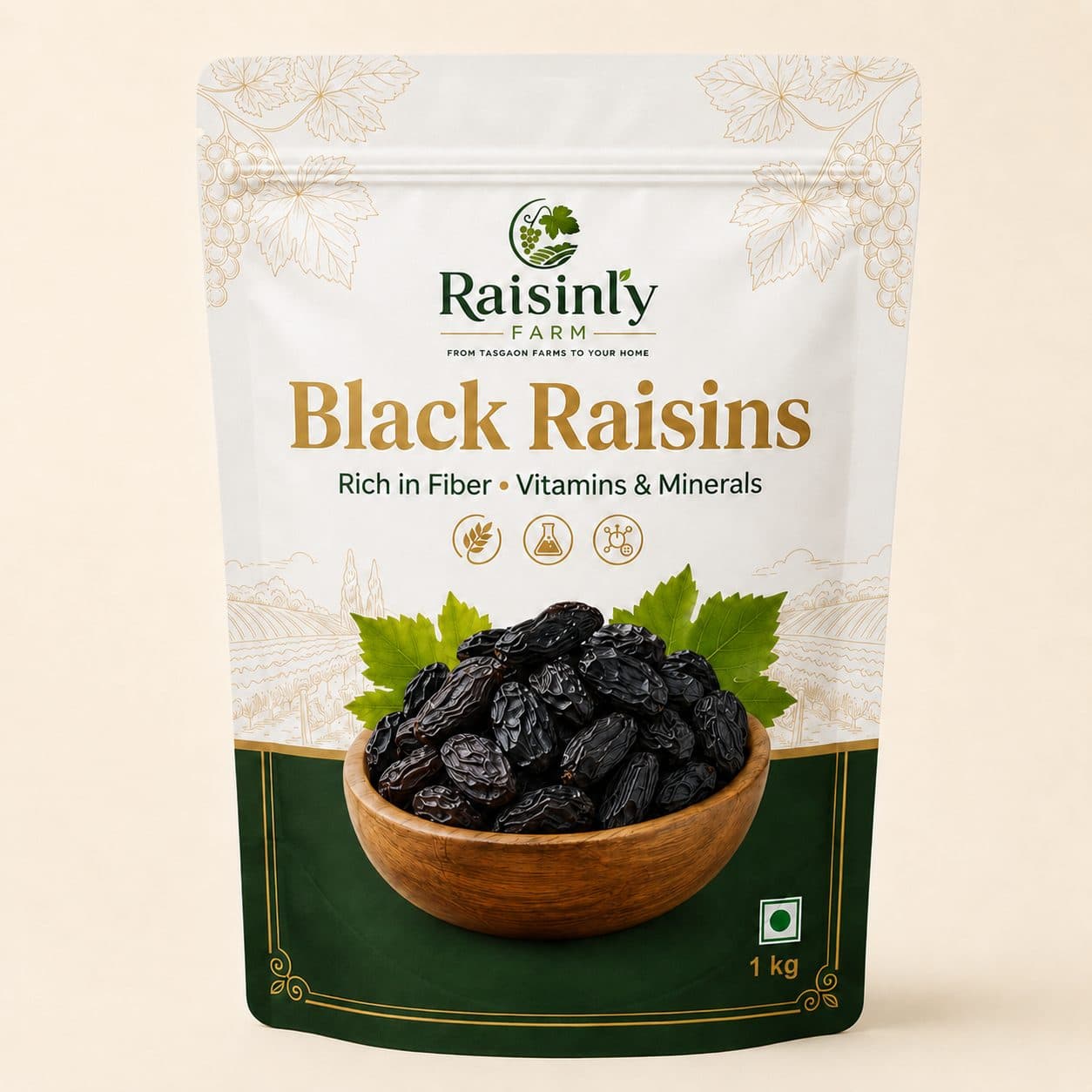
Black Raisins
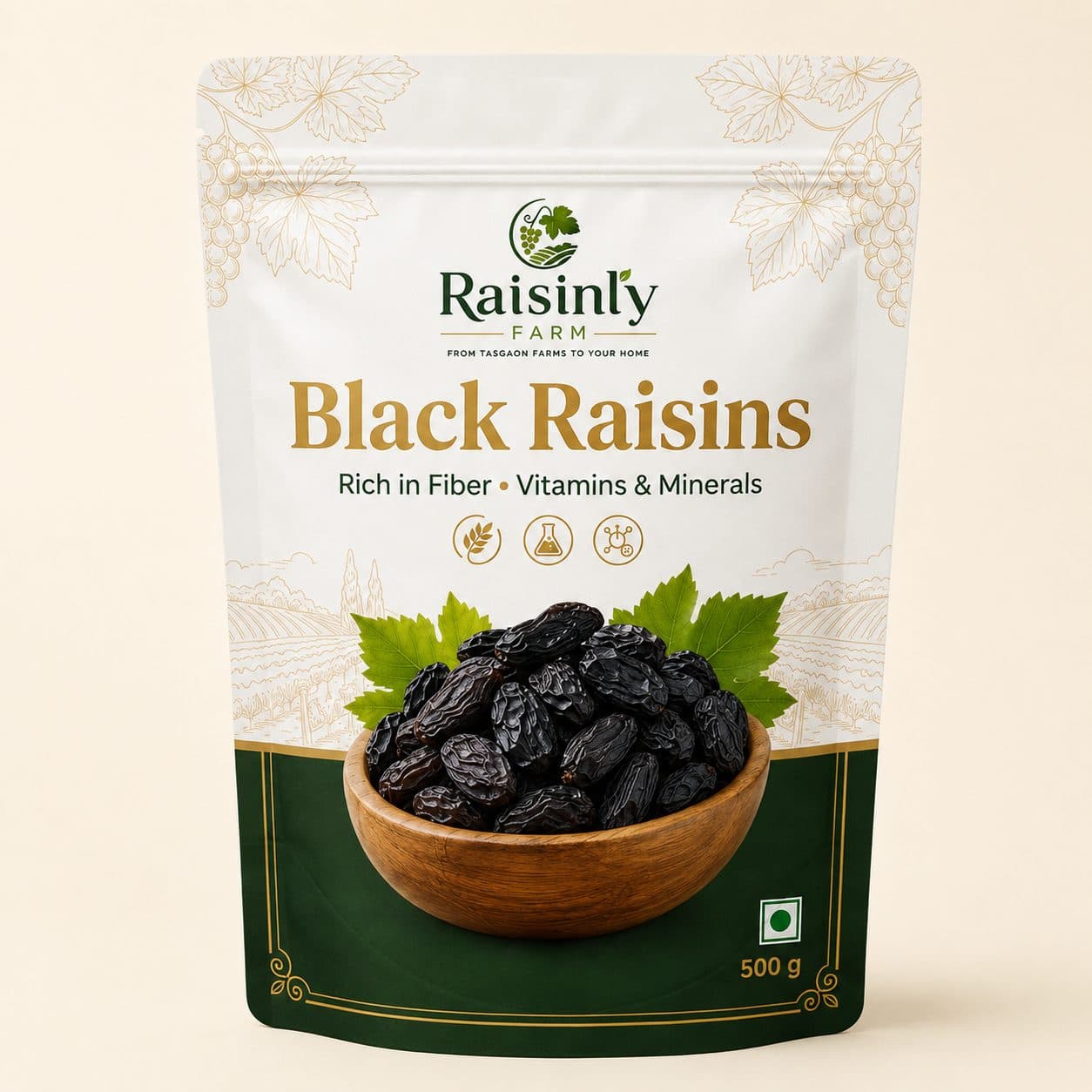
Buying the 1kg pack instead of four 250g pouches saves about 13%.
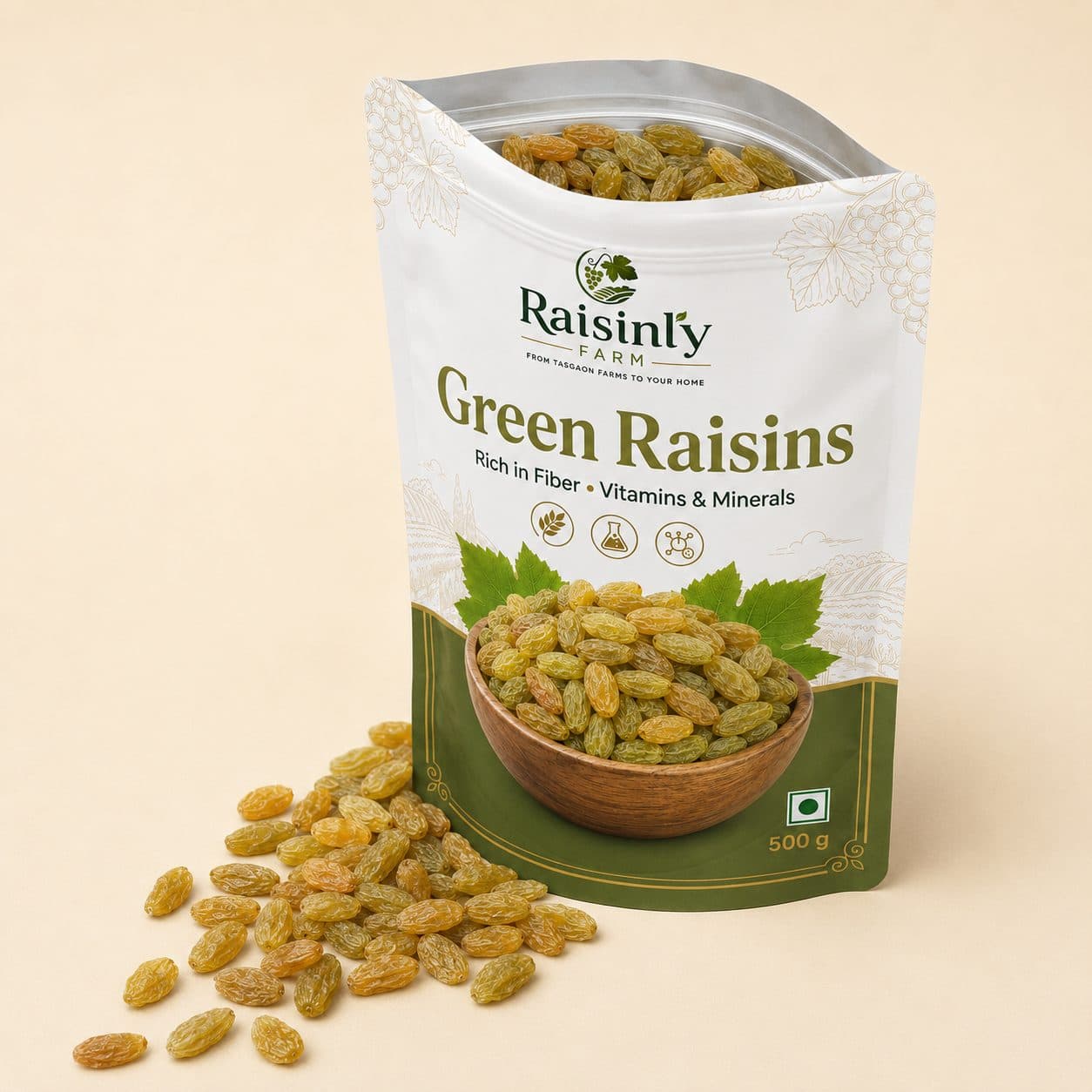
See black raisinsGreen Raisins
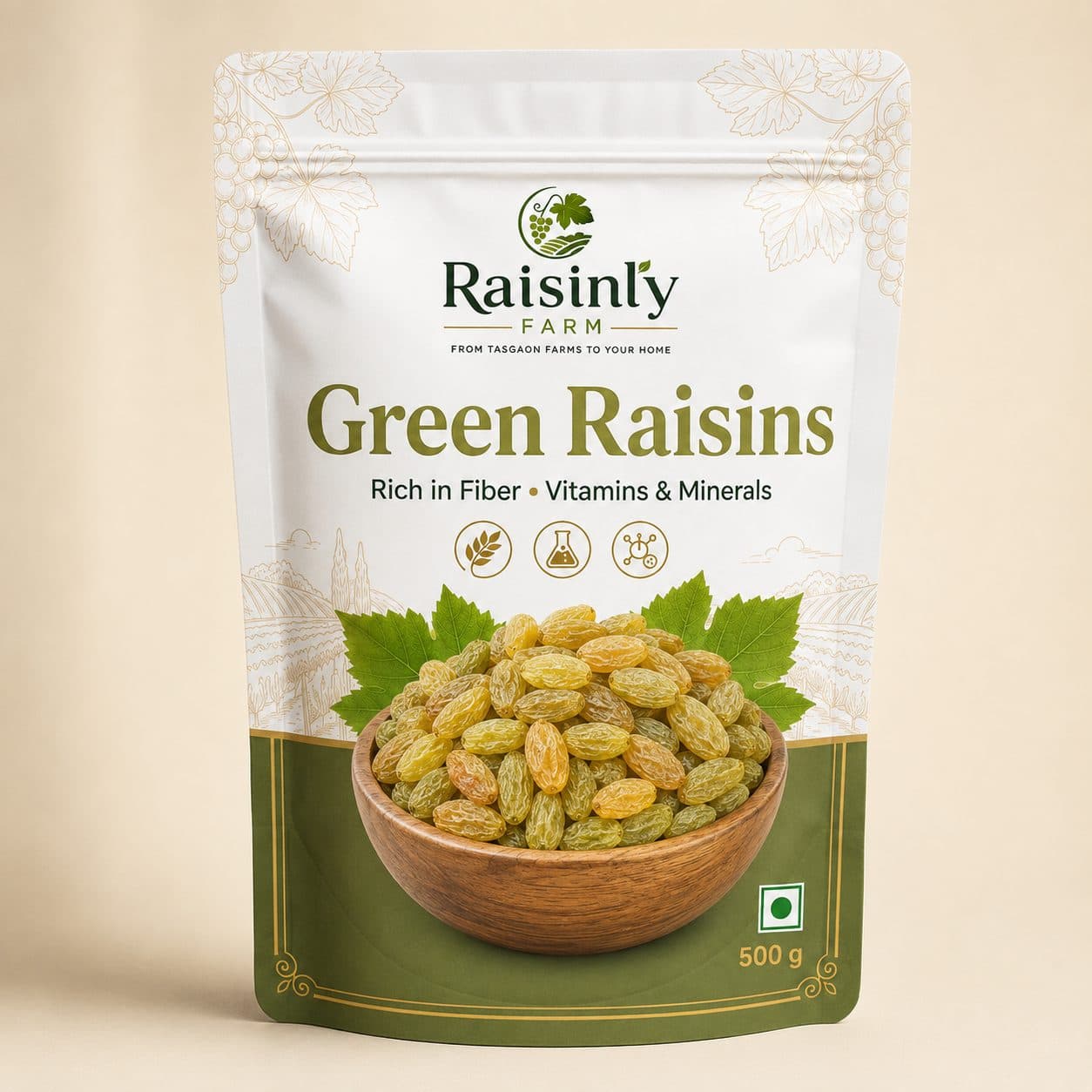
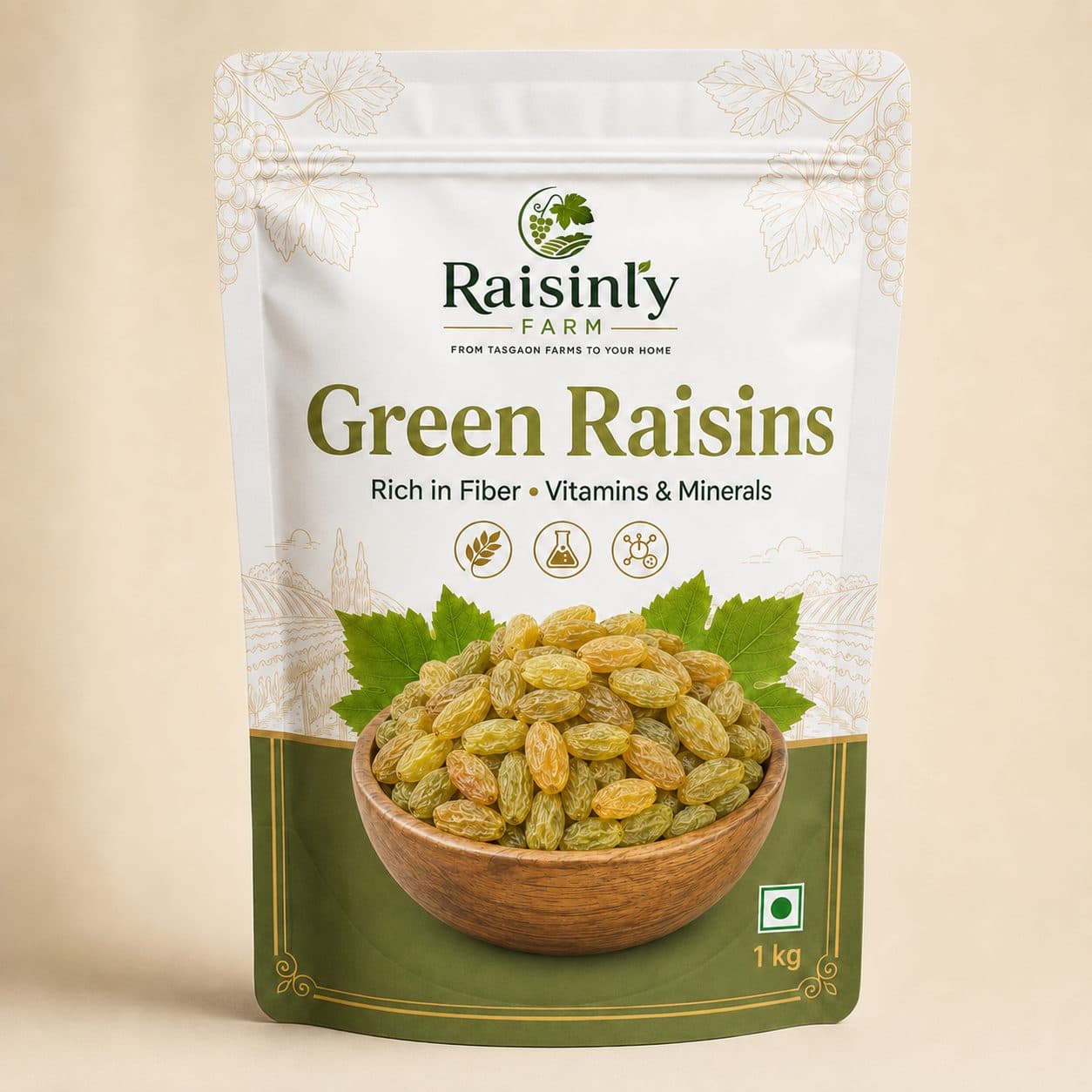
Buying the 1kg pack instead of four 250g pouches saves about 15%.
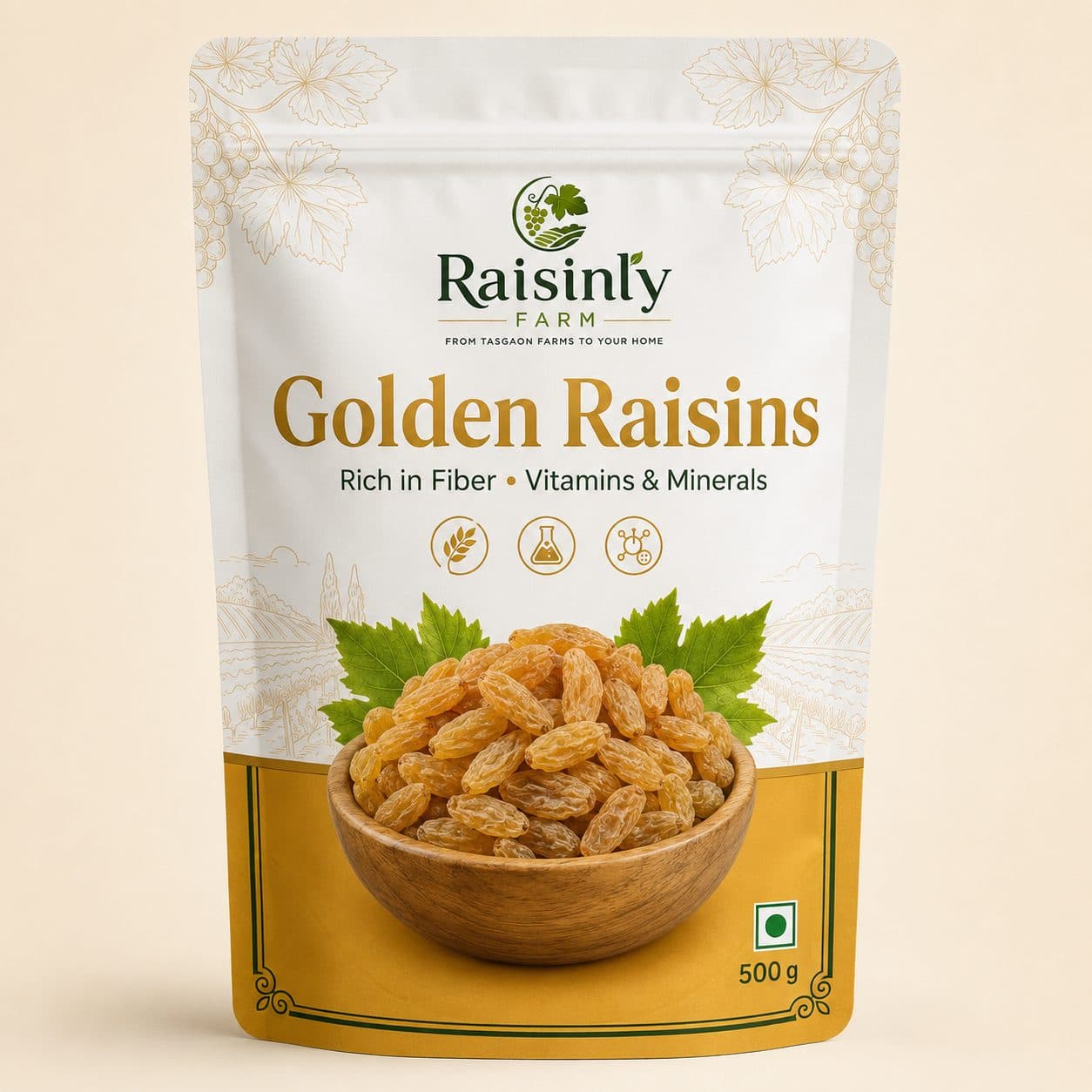
See green raisinsGolden Raisins
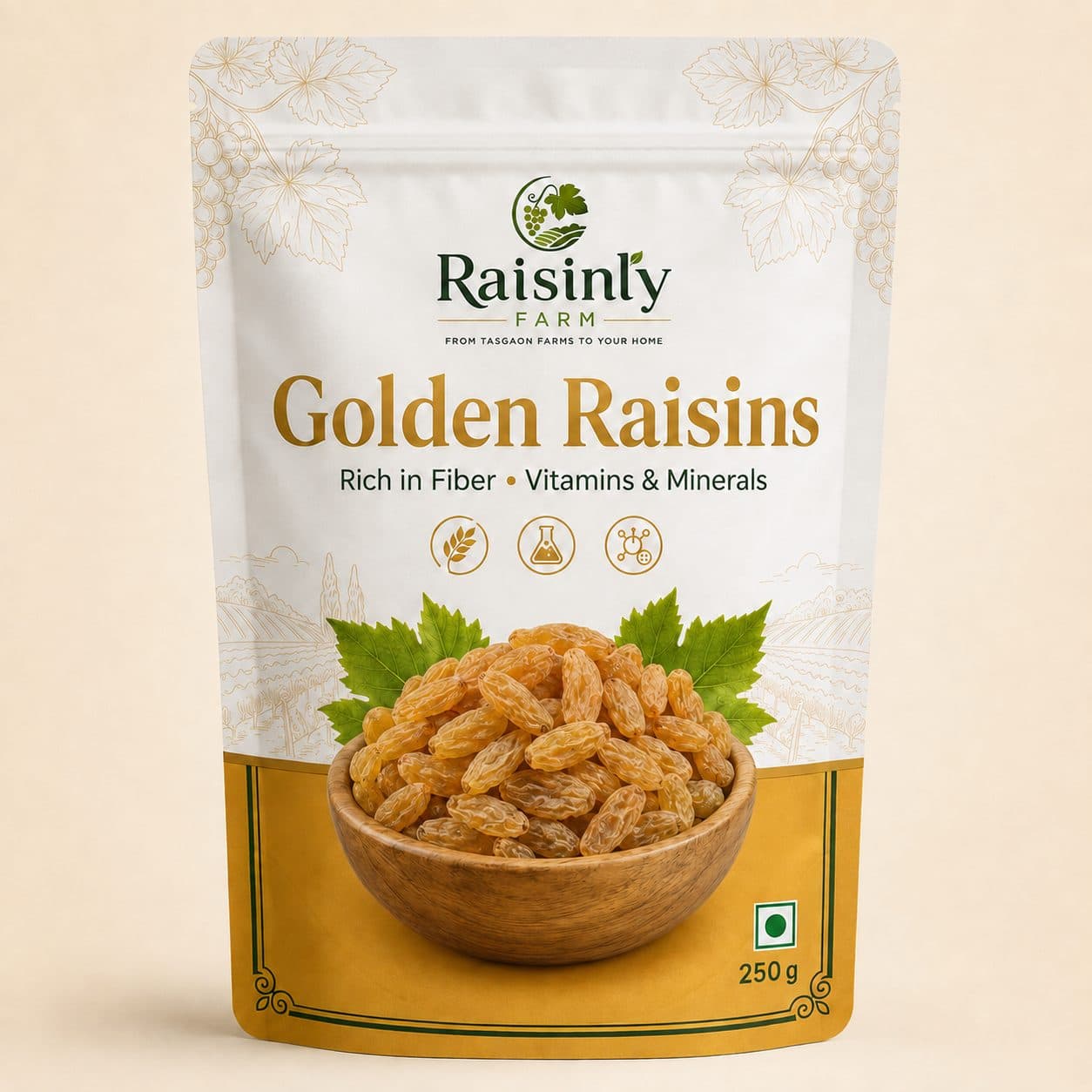
Buying the 1kg pack instead of four 250g pouches saves about 14%.
See golden raisinsBuy at these prices
What actually decides a kismis price
Ask four shops for the rate per kilo and you will get four numbers. None of them mean much on their own. A raisin rate only becomes comparable once you know four things: which variety, which grade inside that variety, what pack size, and whether delivery sits inside the number or outside it. Move any one of those and the price moves with it.
Variety sets the floor. Black raisins are the cheapest of the three because sun drying costs less to run and a tonne of grapes gives more finished weight. Green sits above black. Golden sits highest, because the fruit goes on the racks riper, dries slower under shade, and a larger share of every lot misses jumbo size and falls to a lower grade. If you are choosing between them rather than pricing them, what separates the three types is the better place to start.
After variety, grade takes over. And grade does far more of the work than most buyers expect.
Delivery and shipping
Free above ₹999. Below that a flat ₹59 applies, shown before payment. Cash on delivery adds ₹29 handling. Dispatch is within 24-48 hours from Tasgaon; Maharashtra takes 2-4 days and the rest of India 4-7 days.
Retail price vs wholesale rate
The prices on this page are for sealed retail pouches and include packing, handling and delivery. Bulk is quoted per kilogram, ex-Tasgaon, against a named grade, with a 15kg minimum.
City prices
Pack prices are the same across India, whether the order goes to Mumbai, Pune, Delhi, Bengaluru, Hyderabad or Chennai. Only the shipping line changes, and it is free above ₹999.
Grade moves the rate more than variety does
Inside one variety, the spread between the top grade and a commercial grade is usually wider than the gap between two varieties. A premium select green lot at 18-22 mm, evenly pale, free-flowing, with no browning at the tips, and a commercial green lot of mixed lengths with tired colour are both honestly green raisins. They are not the same product and they do not carry the same rate.
Which is why a number with no grade attached is not really a quote. When a buyer sends us a screenshot of a cheaper rate, our first question is which grade it refers to, and about half the time there is no answer. The ladder we buy and sell against is written out in full on the grade sheet we trade on.
What moves the rate inside a single variety.
Our retail pouches come off the top of each ladder: premium select for green, grade A for black, jumbo for golden. We do not keep a second, cheaper retail grade running alongside it. Splitting retail stock into two qualities under one label is how a brand quietly becomes unreliable, and customers work it out within two orders.
What sits inside the cost of a kilo
Roughly four kilos of grapes make one kilo of raisins. That one ratio explains most of what raisins cost, and it is the reason kismis will never be priced like a grain or a pulse.
Before the ratio even applies, somebody has kept a vineyard alive for a year. Then the bunches come off in the February heat, get dipped in a potassium carbonate and oil emulsion so the skin will let moisture out, and go onto wire racks for 12-16 days of shed rent, labour and nervous weather watching. Only after that is there a kilo of anything to weigh. The full sequence is written out in how a grape becomes a raisin, dipping through to sieving.
Then the weight starts leaving again. Destemming takes some. Sieving takes more, because berries that fall below the size band for a grade cannot be sold as that grade. Hand sorting pulls out stalk, grit, splits and shrivelled immature fruit, and every gram of that was bought at raisin rates. A sack that weighed 25kg at the yard does not put 25kg of premium select into cartons. Nobody advertises that number and every trader in Tasgaon knows it.
Packing is the smallest line and the most visible one. Pouch, label, seal, packing date, carton, courier. By the time a 1kg pack reaches a flat in Bengaluru, the raisins inside it have been handled by hand at least five separate times. None of that makes a high rate automatically honest. It does set a floor, and a raisins price that sits well under that floor is telling you something about the lot before you have opened it.
How February to April sets the price for the whole year
India makes its raisins in about ten weeks. Grapes come off the vines in the Sangli belt from February, go onto racks for roughly 12-16 days, and by the end of April the year’s production exists. Nothing more is made until the next February. Everything after that is storage, movement and trade.
So the raisins price you see in November was largely settled in March. A clean drying stretch leaves premium grades plentiful and narrows the spread between grades. One week of unseasonal rain in the middle of drying and the share of lots making top grade falls, premium rates jump, and the weaker lots get discounted hard to move them. We have watched a single wet spell set the tone for the rest of the year.
Rates are softest between April and June, when fresh stock is competing for buyers and the cold storages are still filling. They hold through the monsoon and climb hardest from September into Diwali, when every mithai maker, gifting company and household in the country wants raisins in the same six weeks. January stays firm because the old crop is thin and the new one is not in yet. The trade side of the same cycle, from inside the Tasgaon belt where the crop is made, explains why the yard moves before the shop does.
Why 1 kg costs less per kilo than four 250 g pouches
Look at the per-kilo line under each pack price in the table above. The pattern is the same in all three varieties, and the reason is boring.
A pouch costs what it costs. So does the label, the seal, the bench time and the scan at dispatch. Packing a kilo of premium select green kismis takes one pouch and one label. Packing that same kilo as four 250g pouches takes four of everything, four fills, four weigh checks. The courier charges by consignment and by weight slab too, not strictly by the gram. All of that difference lands in the effective rate, and it is the same arithmetic that puts the 500g pack neatly between the two.
Buy the 250g pouch when you want to try a variety before committing to it, when it is going into a gift box, or when you use raisins rarely enough that freshness matters more than the rate. Buy 1kg when raisins are a standing item in your kitchen. Kept in an airtight jar out of direct heat, a 1kg pack holds its texture for months, and keeping raisins in good condition at home is mostly a matter of cool, dry and sealed.
Above 1kg the logic reverses. Once you are taking 15kg or more you should be on a bulk rate against a named grade, not paying pouch prices for volume.
250 g, 500 g or 1 kg, and why there is no 100 g pouch
Enough people search for a kismis 100 gm price, or a raisins 100 gm price, that it deserves a straight answer: we do not pack one. A 100g pouch costs almost exactly what a 250g pouch costs to fill, weigh, seal, label and courier, so the effective rate per kilo turns silly, and the pack is empty inside a week. Our smallest is 250g.
If you are converting our packs to a per 100 g figure to compare against a loose counter rate, here is the arithmetic done for you, live from the same prices in the table above. People ask for this a dozen ways — a kismis price 250 gm, a raisin 500 gm price, a raisins 1kg price, a kismis price 1kg — and every one of them is answered by the same nine numbers further up the page.
Effective price per 100 g at current retail pack prices.
Which size actually suits you has less to do with the rate than with how often the jar gets opened. Take 250g when you are trying a variety you have not cooked with before, when it is going into a gift box, or when you want jumbo golden kismis for one round of Christmas cakes and nothing else. Take 500g if raisins turn up in your kitchen every couple of weeks, in kheer, in sheera, on top of a pulao. Take 1kg once you have settled on a variety and know you will finish it, because the per-kilo line is meaningfully lower and the pouch is resealable.
Households that cook with them steadily usually end up keeping two varieties at once rather than one large pack of a single type, which the dishes each variety suits explains better than a price table can. Past 15kg, stop buying pouches altogether and read how a bulk order is placed.
Retail pack price against wholesale rate
Two numbers, quoted two different ways. People compare them constantly and then wonder why the gap looks so large.
A retail price on this page is a sealed pouch delivered to your door with taxes in. It carries the pouch, the label, the packing date, the bench work, the courier and the risk of a replacement if the pack arrives damaged. A wholesale rate is per kilogram, ex-Tasgaon, against a named grade, with a 15kg minimum, and freight sits on your side of the line. We quote it on the day of enquiry and hold that number for 48 hours, because the market underneath it does not stand still.
We do not publish bulk numbers as a fixed list. Anyone who does is either quoting a stale rate or quoting a grade you have not seen. Send the variety, the grade and your monthly requirement to our bulk supply desk and you will get the day’s rate, with a 250g sample offered first, charged at cost and adjusted against your first order.
Shipping, cash on delivery and what shows on the bill
The number on the pack is the number you pay. Two lines can be added at checkout and nothing else appears afterwards.
The practical consequence of that ₹999 line is that one larger order almost always beats two small ones. A 1kg pack of black with a 500g pack of green clears it. So does a 1kg green with a 250g golden. Two separate ₹500 orders placed a fortnight apart pay ₹59 twice and give you nothing extra for it.
We dispatch in short runs rather than holding made-up pouches on a shelf, so what arrives usually carries a packing date within a few weeks of your order rather than a best-before window and nothing else. If you need a GST invoice for an office or a shop purchase, send the GSTIN with the order and it goes on the bill. Replacement, refund and cancellation terms in full sit in our shipping and returns policies.
When a cheap raisin price is a bad lot
There is a level below which nobody is selling you the grade they named. Not because of margins. Because the lot itself cost more than that at the yard.
The usual ways a low number gets built: a lower grade sold under a premium name, a high-moisture lot where part of what you pay for is water, last season’s stock cleared before the new crop lands, or a heavier sulphur treatment holding colour on fruit that would otherwise look tired. None of that is illegal. All of it explains the rate. Five checks tell you which one you are looking at.
- Squeeze a handful and open your hand. Good stock falls apart. If it holds as a lump, moisture is high and you are paying for water.
- Look at the ends of the berries. Browning at the tips of green raisins usually means a slow or wet drying week.
- Smell the pack the moment it opens. Raisins smell faintly of grape and sugar. Sharp, fermented or chemical is a lot that sat badly somewhere.
- Find a packing date on the pouch. A best-before window on its own tells you nothing, and a wide one hides how long the stock has been sitting made up.
- Tip some onto a plate. Stalk pieces, grit and shrivelled immature berries mean the hand sorting was skipped to save cost.
We run these checks on every lot before it reaches the packing bench, and they work just as well on a kitchen counter. The longer version, including what each fault tells you about how the lot was dried, is in our guide to inspecting a lot.
Kismis rate in Mumbai, Delhi, Bengaluru and everywhere else
The same. A 1kg pack of grade A black kismis costs ₹799 in Mumbai, in Hyderabad, in Kochi and in Guwahati. We ship from one place, so there is no city-wise rate card and no local surcharge. The only line that differs between two orders is shipping, and above ₹999 that line is zero.
Shop rates in your city will differ from ours in both directions, and they should. A shop buys through two or three hands, carries rent and shrinkage, and very often names no grade at all. We buy lot by lot in Tasgaon and pack it ourselves, which takes a layer out, then pay a courier to carry a kilo across the country, which puts one back in. The difference that matters is that you know which grade is inside the pouch and when it was packed.
Retail orders go by courier wherever you are, including within Maharashtra. Bulk buyers within driving distance sometimes collect from Tasgaon instead, which takes freight out of the quote entirely.
How to compare two kismis rates properly
Four questions turn two unrelated numbers into a comparison you can actually act on. Ask them in this order, because the first one alone settles a surprising number of arguments.
- 1Put both on a per-kilo basis. A ₹229 pouch and a ₹799 pack are not comparable until you divide. Loose counters quote per kilo, online listings quote per pack, and half the confusion lives here.
- 2Ask which grade the number refers to. Premium select, grade A, jumbo or commercial. If the seller cannot name one, you are being quoted a variety, not a product.
- 3Ask when it was packed. A best-before window that runs eighteen months tells you nothing about how long the stock has already been sitting made up.
- 4Check whether delivery is inside the number or outside it. A rate that looks lower by forty rupees and then adds freight is not lower.
Run that on us as readily as on anyone else. Our answers are the same every time: premium select for green, grade A for black, jumbo for golden, a packing date printed on every pouch, delivery inside the price above ₹999. All three varieties in all three pack sizes sit together on the full pack list if you want to price a mixed order.
Price questions
Our 1 kg packs are green raisins at ₹849, black raisins at ₹799, golden raisins at ₹999. Prices are inclusive of all taxes, and orders above ₹999 ship free across India.
Buying 15kg or more?
Retail packs aren’t priced for bulk. Send us your variety, grade and monthly quantity and we’ll quote current wholesale rates.