
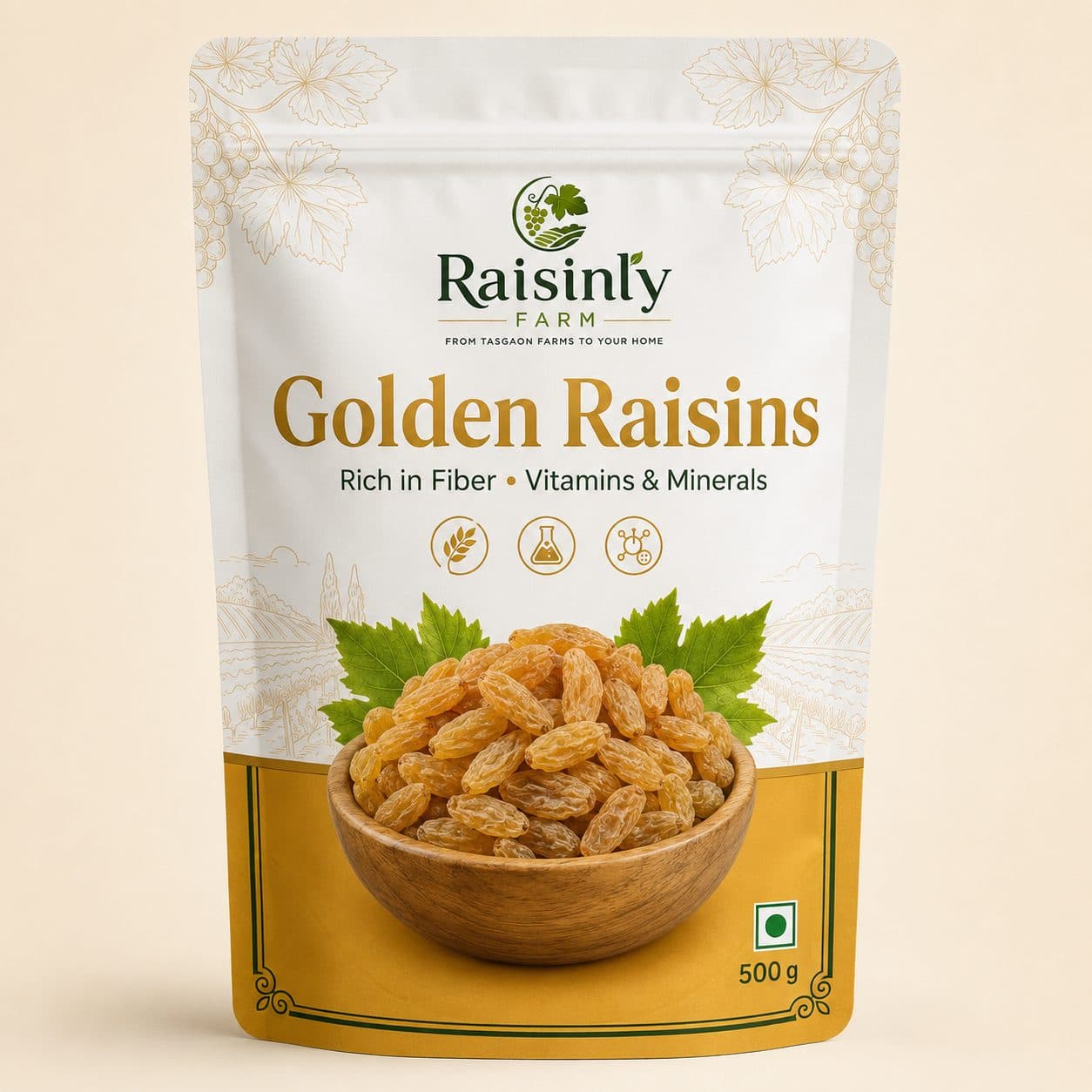
About golden raisins
Golden raisins and yellow raisins are the same product under two names. Bakery buyers say amber, retail customers say golden, and older shopkeepers in Sangli will say yellow. We quote all three against one grade sheet. The fruit is Thompson seedless picked riper than the grapes that go into green lots, then dried under shade net on a slower schedule so it stays plump instead of shrinking hard. What you get is a large, tender, honey sweet raisin that sits between green's tartness and black's depth without landing on either.
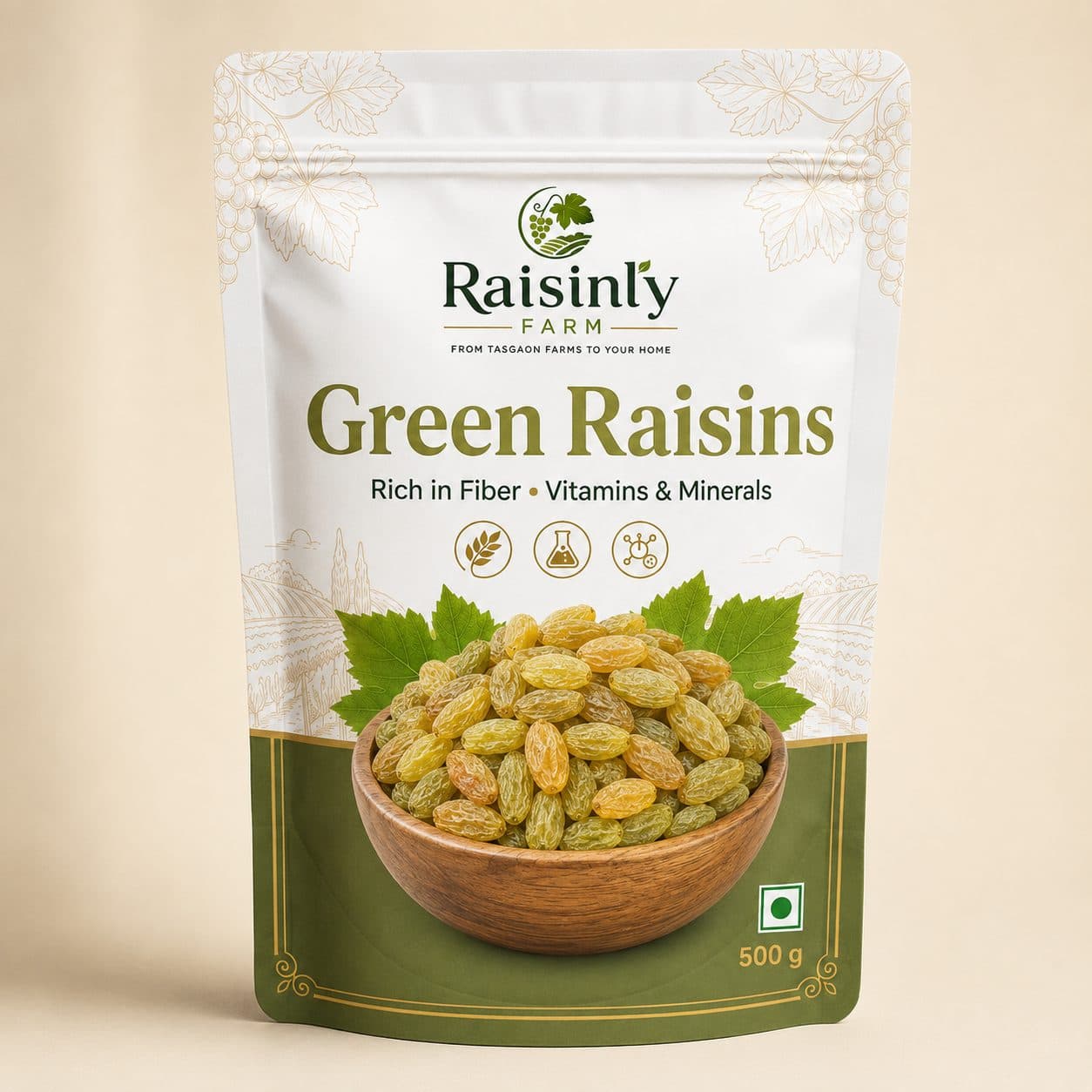
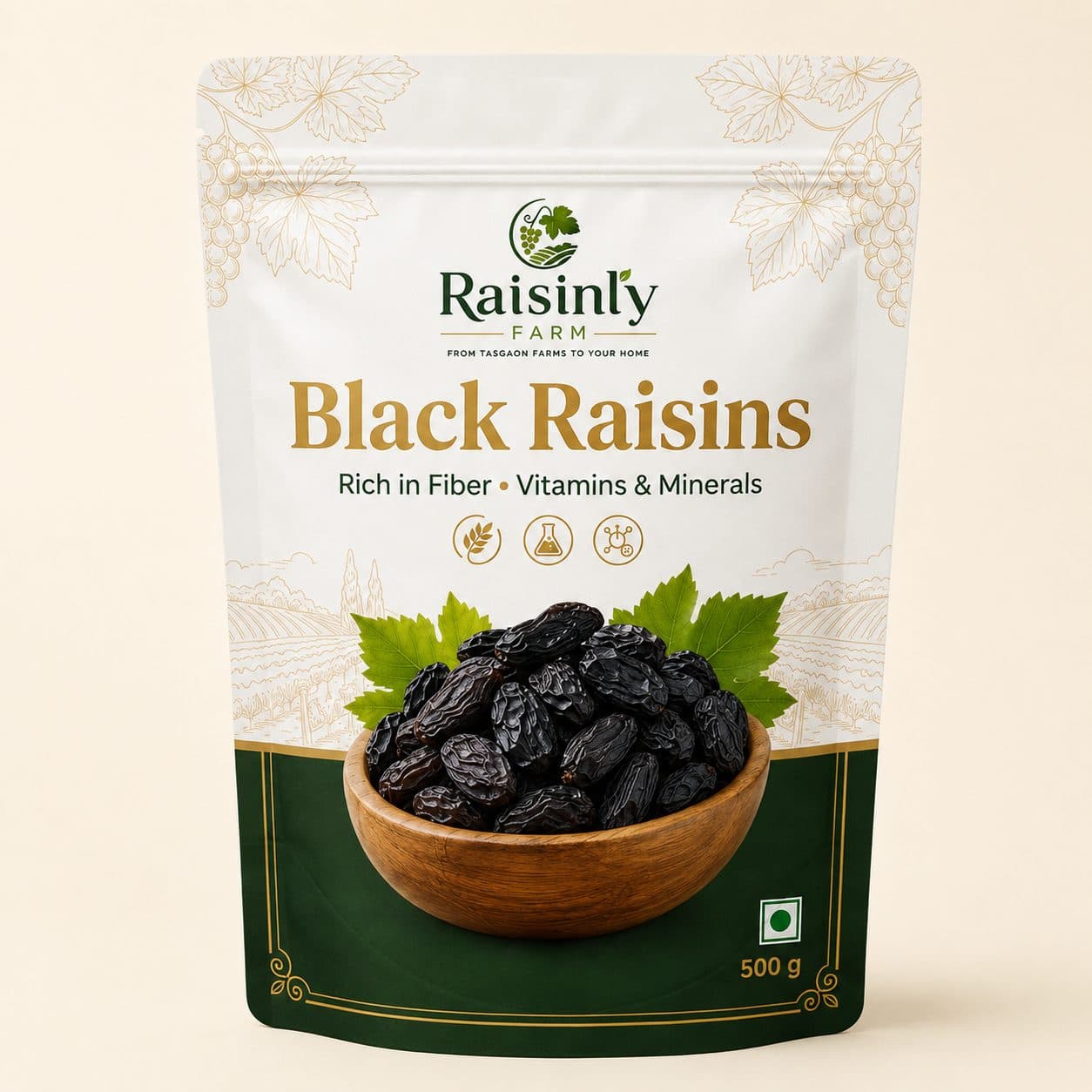
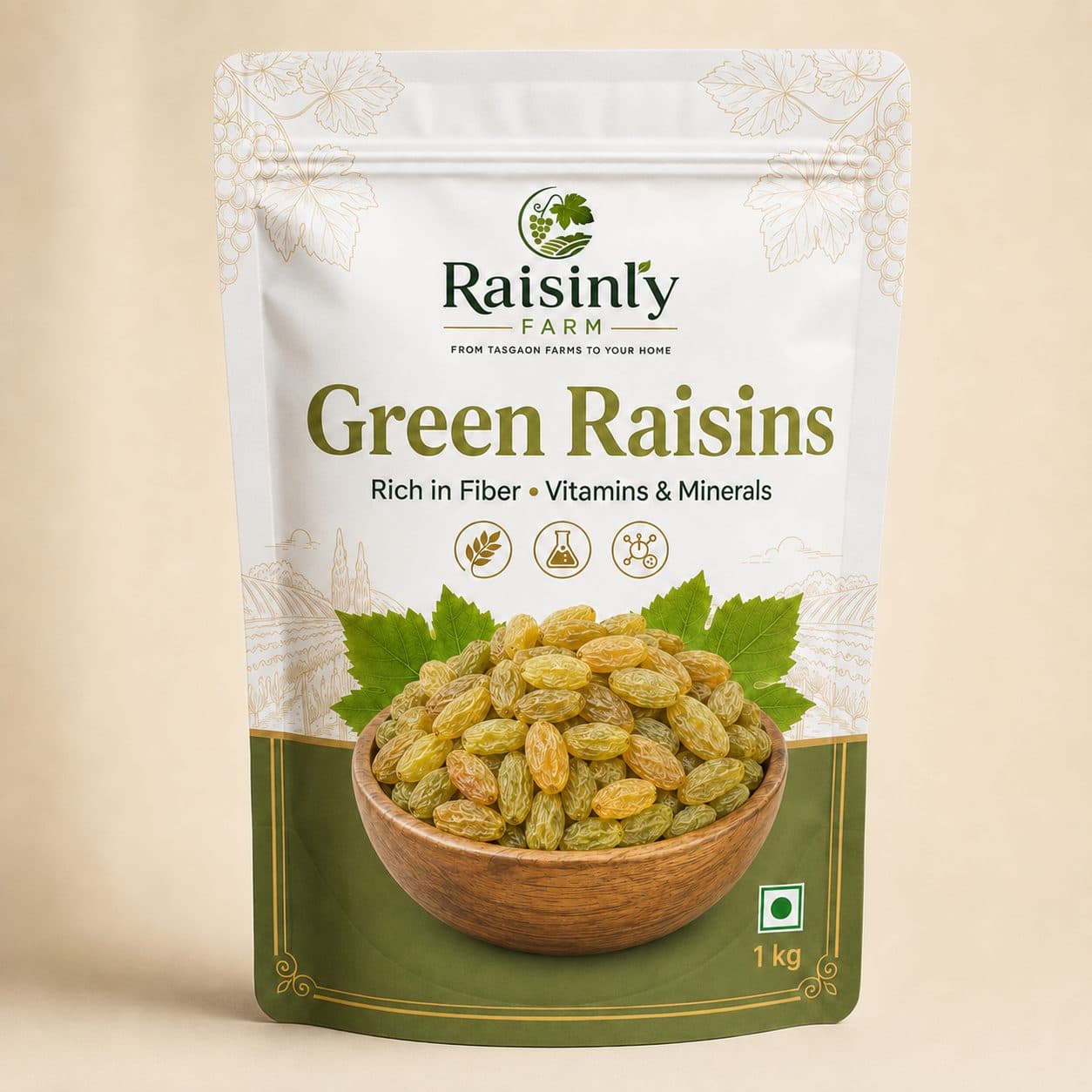
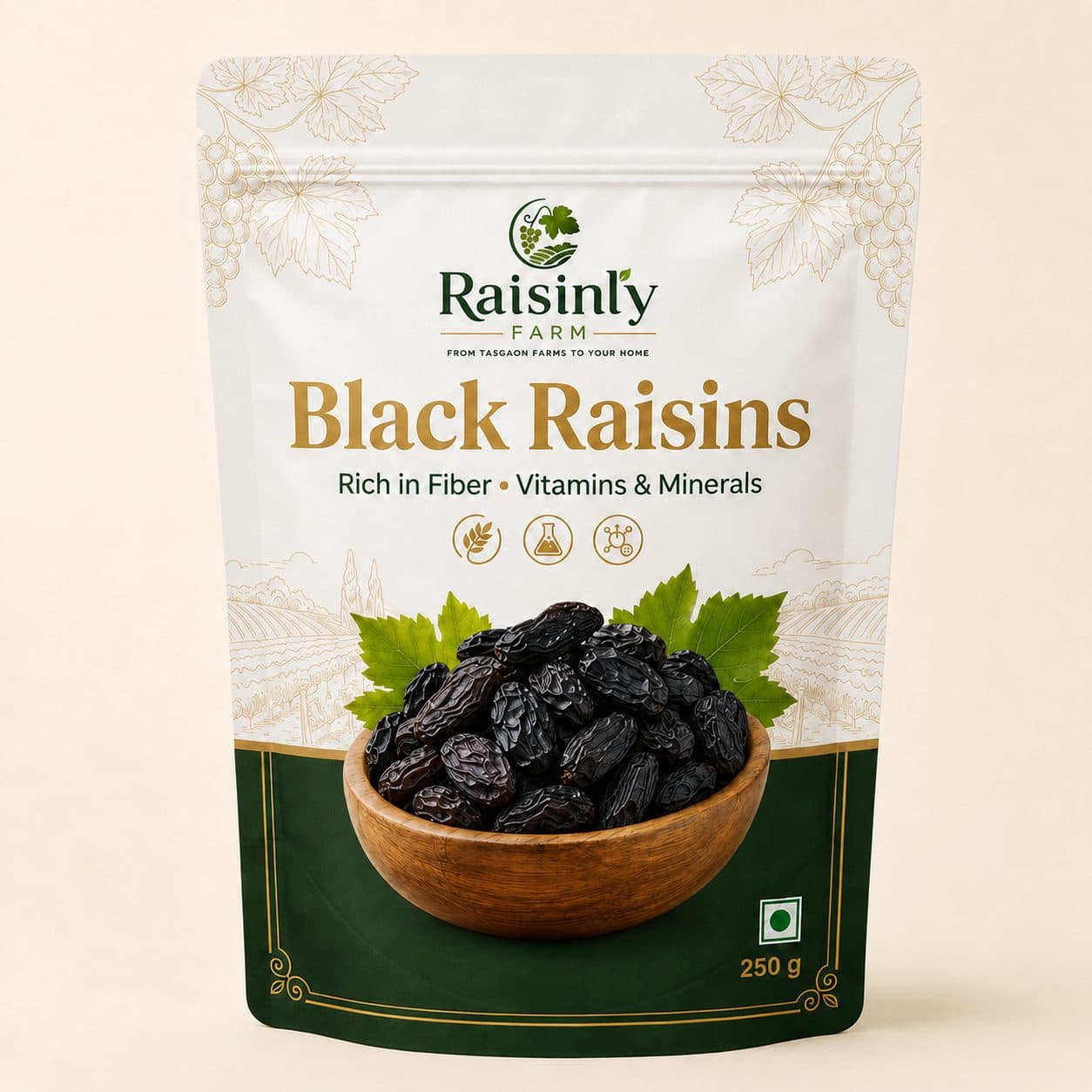
Packs are 250g at ₹289, 500g at ₹539 and 1kg at ₹999. That is ₹1,156 a kilo on the small pouch against ₹999 on the large one. Golden is the dearest of the three varieties and it is dear for a reason: riper fruit, slower drying, more rack time, more sorting loss, and the smallest volume of the three lines we run. The golden raisins price against green and black, pack by pack with the per kilo working shown, is on the kismis price page.
This pouch is the jumbo band: 16-20 mm, even warm amber, dry to the touch, no stems, no stones. Golden seedless raisins are what the trade calls them and seedless is what they are, every piece.
Taste is mild and rounded. Honeyed rather than jammy, with only a trace of the tartness that green finishes on. The texture is the giveaway when you first open a pack: they are noticeably plumper and more tender than either of the other two varieties, and they give at the centre rather than resisting. That tenderness is also why golden takes a soak better than anything else on the bench. Fifteen minutes in warm water and they swell without going to mush.
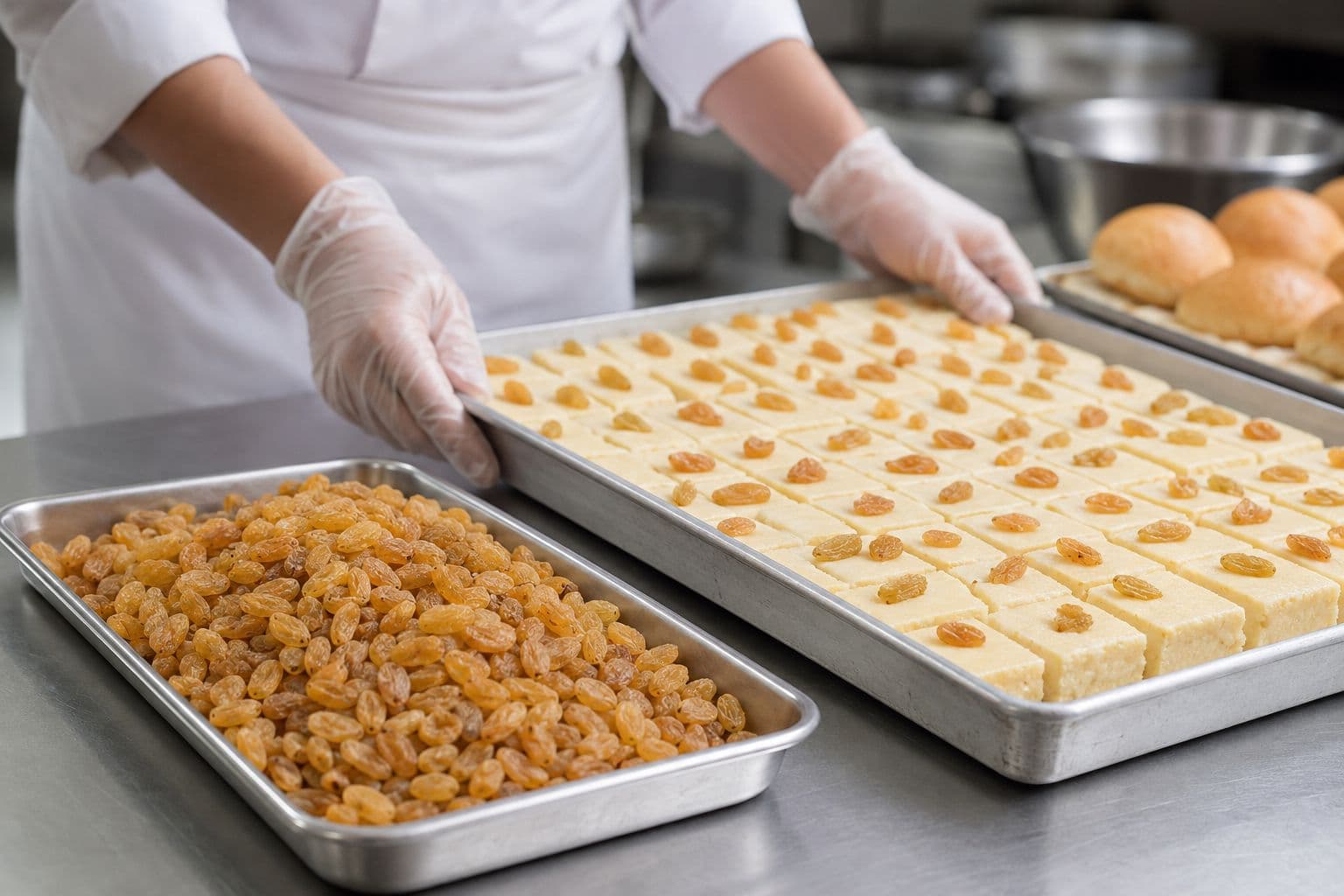
Colour is the commercial argument for buying them. Amber holds against a pale crumb where black reads as scorched and green goes drab. Bakers know this, which is why golden goes into fruit loaves, rusks, tea cakes, hot cross buns and anything where the fruit is visible on the finished piece. Hamper packers buy it for the same reason. A jar of amber raisins next to a jar of black on a gift tray does most of the work on its own.
One plain statement, because golden is the variety where the question comes up most. We do not hold organic certification for any of our raisins. None of our golden lots are certified organic, none are sold as organic, and we will not describe them as natural or chemical free in a way meant to imply a certificate we do not have.
For everyday cooking where the raisin has to hold its shape in a boil, long seedless green kismis is the better buy and it costs less. For snacking, sweets and anything where the fruit cooks down out of sight, seedless black kismis is sweeter and cheaper again. How all three compare on taste, size, colour and rate is set out in the raisin varieties guide.
How these raisins are made
Harvest is February to April, the same window as the other two varieties, but golden lots are picked later off the vine so the sugar in the fruit has further to go. The bunches get a food grade dip that breaks the waxy bloom on the skin, then go onto racks under shade net on a slower schedule than green. Slower drying is what keeps the piece plump. Push it faster and you get a smaller, harder raisin that no bakery will accept as jumbo.
Golden lots carry sulphur dioxide, used within the permitted limits, and that is what holds the amber colour rather than letting the skin brown down towards black. This is standard practice for the variety in every producing region we know of, and the ingredient line on this pack states it: dried grapes, permitted preservative (E220). If you want a raisin with no sulphur on it, buy black, which is not treated because there is no pale colour on it to protect.
We buy lot by lot through the season from growers and traders around Tasgaon, Palus, Khanapur and Miraj. Golden is the smallest of our three lines and the one that runs out first, usually somewhere around the turn of the year, and after that the jumbo band gets thin until the new crop lands. Some of what we buy comes off a rack we have stood next to, some passes through the market yard, and some sits in cold storage before we take delivery. We are not going to claim otherwise. Origin, season and how rates behave through the year are covered on the Sangli and Tasgaon page.
Sorting on golden is stricter than on the other two, because a single browned piece stands out in an amber handful in a way that a browned piece never does in a black one. Size first, then colour uniformity, then moisture, which we hold around 15%. Graded stock goes to cold storage, and the tenderness of the variety is exactly why that matters: a plump raisin has more moisture to lose and it hardens faster in a warm godown than green does.
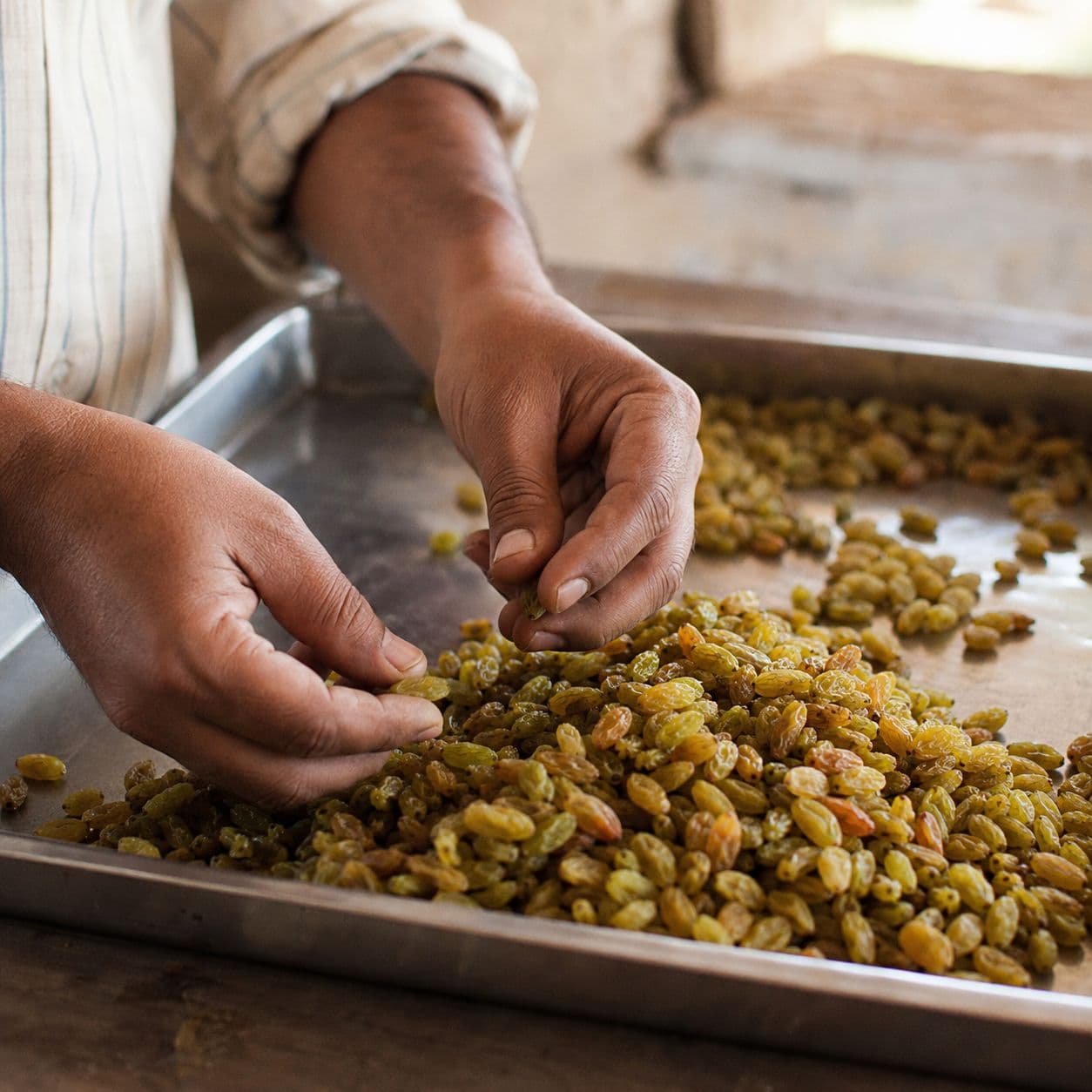
We pack in short runs rather than sitting on one large stock, so the pouch that reaches you is usually from the current season. We print a packing date on the pack, where most brands give you only a best before. On golden that date is the one to check, because the variety loses its plumpness well before it loses its safety. Each pouch is nitrogen flushed and sealed at our bench in Tasgaon.
How to use golden raisins
Golden raisins keep their colour through a bake and plump generously when soaked, which is the whole reason bakeries specify them wherever the fruit shows on the finished product. They are also mild enough to disappear into a savoury dish without fighting it. Soak them if the batter is dry and skip the soak if it is wet, because a soaked raisin in a wet batter will bleed moisture into the crumb around it.
Breads and fruit loaves
Soak 15 to 20 minutes, drain, pat dry, then add in the last minute of mixing so the dough does not tear them apart.
Cakes and muffins
Dust the drained raisins in flour before folding in, so they stay suspended instead of sinking into the base of the tin.
Rusks and cookies
Use straight from the pack with no soak. The drier crumb keeps them chewy rather than wet in the middle.
Pulao and savoury rice
Mild enough to go into a biryani or a saffron pulao without pushing the dish sweet. Fry in ghee until they swell.
Mithai and hampers
Amber reads premium in a jar or a box. Pair with black for contrast on a tray, and keep the jumbo pieces where they are visible.
Cheese and cold boards
Hotel kitchens use them alongside cheese and cold cuts, where the honeyed finish does what a chutney would otherwise have to.
Which of the two pale varieties belongs in a given bake usually comes down to whether you want the fruit tart or mellow. That decision is worked through in amber jumbo raisins against the long green grade, and the colour argument against dark fruit is in black raisins compared with the amber grade.
How to store them
Keep the pouch closed and press the air out before you reseal it. An airtight glass or steel jar in a dark cupboard is better still. Away from sunlight, away from the stove, away from anything strongly scented. Stored that way they stay good for nine months from the packing date printed on the pack.
Golden is the variety where storage shows up fastest in the eating. It does not spoil quicker than the others, but it hardens quicker, because a plump raisin has more moisture to lose than a shrunken one. A jar left open on a warm kitchen shelf through May will still be perfectly safe in June and will have lost the tenderness you paid extra for.
The label carries what the rules require and what you would want to check anyway: net quantity, the ingredient line, packing date, best before, batch code, our FSSAI licence number and the green vegetarian mark. Ingredients read dried grapes and permitted preservative (E220). No added sugar, no oil, no glazing agent and no added colour. Country of origin is India and the sourcing region is the Sangli and Tasgaon belt in Maharashtra. Nutrition per 100g is printed on the back of the pouch and repeated further down this page.
For longer keeping, the fridge is enough and it suits golden particularly well, because cold slows the hardening. Raisins do not need a freezer. If you buy a kilo for a bakery kitchen, decant a working jar and keep the rest sealed and cold rather than opening the same pouch every morning.
White crystals on the surface are crystallised natural sugar, not mould. They wipe off and they dissolve in heat. Mould is a different thing entirely: fuzzy, greyish, and it smells sour before you see it. If a pack ever arrives like that, photograph it and send it to us. We replace it without argument and we pull the rest of the batch off the bench.
Grades explained
Golden has the shortest grade ladder of the three varieties, because the fruit that does not make the size and colour cut usually gets sold as something else entirely. Size, colour uniformity and moisture set the band, and within a variety the grade moves the price more than the variety itself does. This retail pouch is jumbo. A third commercial band turns up in some seasons and not in others, depending on how the drying weather ran in March.
Green vs black vs golden
Bakers who have only ever used dark fruit are usually surprised by how much of the difference is visual rather than in the taste. Buy a 250g of each once and settle the argument in your own kitchen. If you are buying 15kg or more for a bakery, a rusk unit or a hamper line, the size bands, tolerances, carton formats and quotation basis are on bulk amber and yellow raisins. Rates there are quoted on the day of enquiry, ex-Tasgaon, and held for 48 hours.
Product information
Nutrition per 100 g
Indicative values for dried golden jumbo raisins. Actual values vary by lot and season.
Questions buyers ask
Questions about orders, delivery, returns or wholesale rates are answered on the full FAQ page.