

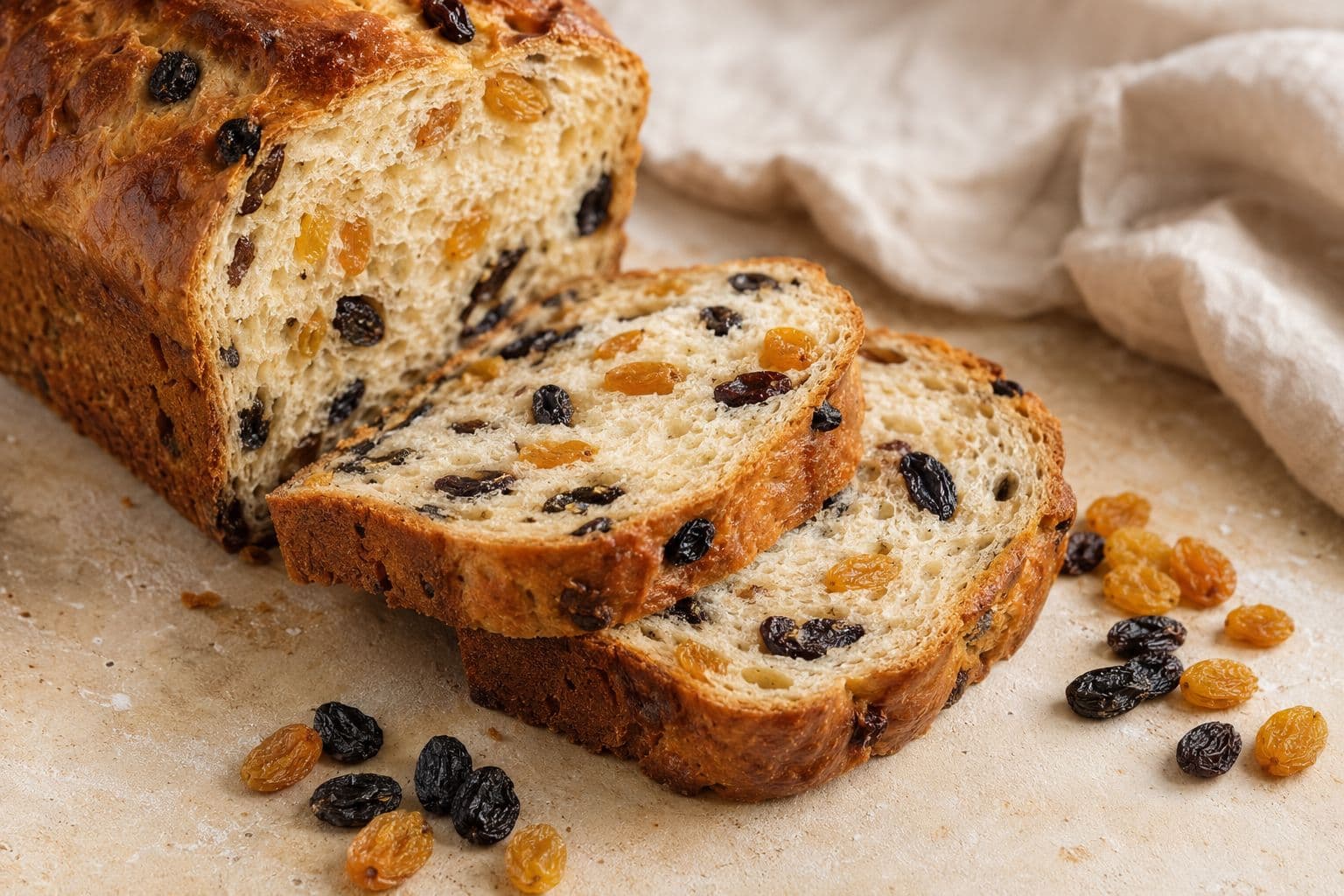
Black raisins vs golden raisins is a choice about colour and sweetness. Golden raisins, sold in India as yellow raisins, are shade-dried from riper grapes, so they stay amber, plump and mildly honeyed. Black raisins are sun-dried, so they finish dark, soft and the sweetest of the three varieties. Bakers buy golden for appearance. Sweet units and snackers buy black. Golden carries the highest retail price of the three.
The short version
Golden raisins and yellow raisins are the same raisin
Before anything else: yellow raisins, golden raisins and golden seedless are three names for one product. Search yellow vs black raisins or black raisins vs yellow raisins and you are asking the same question this page answers. Indian trade tends to say golden or jumbo. Imported packs and older recipes say sultana, which is close enough that golden is the right substitute when a British or Australian recipe calls for one.
Black raisins carry their own set of names, black kismis and kali kismis being the common ones. Same fruit, same belt, different drying yard. If you want the whole shelf laid out at once, from munakka to seeded lots, that sits on the raisin variety pillar.
Why one finishes amber and the other nearly black
Both start as Thompson seedless off the same vines around Sangli and Tasgaon, picked between February and April. Golden comes off grapes left a little longer on the vine, so they enter the shed riper and sweeter, and then dries slowly under shade net with a sulphur treatment that fixes the colour before the fruit can brown. It comes off the racks large, tender and warm amber.
Black gets none of that. Trays go out in open sun for ten to fourteen days, the skin darkens as the sugars caramelise, moisture drops fast and the fruit finishes smaller and rounder. No dip is needed and no colour has to be protected, which is a large part of why black is the cheapest of the three at every pack size.
The riper-fruit route costs a grower more. Leaving grapes on the vine longer is a weather bet, and a bad week in March can turn a lot destined for jumbo golden into ordinary drying stock. That risk is priced into what golden sells for. The full process, both routes, is written out in how a grape becomes a raisin.
Taste, size and bite
Black is the sweetest raisin on an Indian counter. It is jammy, deep, almost date-like at the finish, and it gives way instantly between the teeth. Golden is milder. There is honey in it and a faint tartness underneath, and the flesh is plump and tender rather than soft, so it holds a shape you can see on a plate.
The size gap is obvious in the hand. Jumbo golden runs 16-20 mm and is broad. Grade A black sits at 12-16 mm and is compact. Ten grams of golden is fewer, larger pieces, which matters if you are counting fruit into a hamper or a bakery batch rather than weighing it.
That counting question comes up more than people expect. A bakery working to a set number of visible pieces per loaf gets noticeably fewer pieces out of a kilo of jumbo golden than out of a kilo of grade A black, so swapping one for the other by weight changes how the finished product looks before colour even enters the argument. Adjust the dosage as well as the variety.
Black raisins and golden (yellow) raisins compared
In an Indian kitchen
For laddoo, panjiri, halwa, chikki and anything ghee-roasted, black wins on cost and on sweetness, and its colour vanishes into the mixture anyway. A sweet unit buying by the sack has no reason to pay a jumbo rate for fruit that will be invisible inside a besan laddoo.
Golden earns its price where the raisin is meant to be seen. Kesar pulao, biryani, sheera, shrikhand, kaju katli boxes, dry fruit trays at a wedding. Against saffron rice or a pale khoya sweet, amber looks deliberate and black looks like a burnt bit. Hotel kitchens order golden almost entirely for this reason.
One practical note on milk-based sweets. Black raisins bleed colour into simmering milk and dull a kheer. Golden does not, and it holds its shape as well as green does, because both are shade-dried. If you are choosing between the two pale varieties instead, that split is covered in green against golden.
Black raisins vs golden raisins in the bakery
This is where the two varieties genuinely separate, and it is the reason most of our bakery enquiries end up on golden. In a light crumb, a tea cake, a fruit loaf, a rusk, a brioche, golden raisins read as fruit. Black raisins read as dark specks, and any piece sitting proud on the crust caramelises faster than the dough around it and comes out looking scorched even when the bake is correct.
Handling differs too. Golden plumps generously in 15 to 20 minutes of warm water and holds that volume through the oven, so a loaf keeps visible fruit instead of dried knots. Drain it, pat it dry, dust it in flour from the recipe, then fold it in, or the fruit sinks to the bottom of the tin. Black needs less soaking, around 5 minutes, because it is already soft and will disintegrate if you leave it longer.
Black is not wrong in a bakery. It is right in dark and spiced work: date cake, brown bread, Christmas fruit mixes, masala buns, anything already the colour of the raisin. At production volume the saving is real, and a unit running two hundred kilos a month notices it. Bakery-specific grades, moisture tolerances and packing sit on our bakery supply page.
Price, grade and what moves the gap
Golden is the dearest of the three varieties at retail and black is the cheapest, and the gap is wider than the one between black and green. Two hundred rupees across a 1kg pack.
Most of that is grade rather than colour. Golden is sold as jumbo, and a larger size grade means more of the crop gets sorted out at the table, so less usable fruit comes off each tonne of grapes. Add the sulphur treatment and the longer shade schedule and the rate follows.
Rates for the two move through the year, and not in step with each other. New season stock lands from March and the market usually softens for a few weeks while growers clear space. Black firms up before Diwali, when every sweet unit in the state is buying at once. Golden firms up ahead of the Christmas and wedding bakery run. A bulk buyer who can order a few weeks ahead of those peaks rather than into them buys better, and that timing is worth more than any haggling over a quoted rate.
Retail pack prices, black and golden
Ask for the grade before you compare rates
A quoted rate with no grade attached is not comparable to anything. Somebody selling standard golden against our jumbo will always look cheaper on paper, and the fruit in the carton will be visibly smaller. Both of our retail lines are graded and printed: grade A for black, jumbo for golden.
For bulk we quote against a named grade on the day, hold that rate for 48 hours and work to a 15kg minimum. The Tasgaon market moves through the season and a rate held for a month is a rate somebody eventually eats. Samples are 250g, charged at cost and adjusted against the first order. Retail buyers can see every pack and the per kilo maths on the kismis rate page.
Golden is the fussier one to store
Both want the same basics: airtight, out of the sun, away from the stove, and refrigerated once opened during June to September. What goes wrong is different for each.
Golden loses its colour. Left in a clear jar on a lit kitchen shelf through a Maharashtra summer, an amber lot drifts brown over a few months and ends up looking like a poor black lot. Nothing is unsafe about it and the taste barely shifts, but the appearance you paid the jumbo premium for is gone. Keep golden in an opaque container or in its own pack inside a tin.
Black goes the other way. It clumps. The surface sugar sets an open pack into a solid brick in humid weather, and the fix is thirty minutes in the fridge before you break it apart with a spoon. White crystals on either variety are crystallised sugar, not mould. A sour, fermented smell is the one that means throw it out.
Both are worth buying in a size you will actually finish. A kilo of golden opened for one festival and then left on a shelf until the next one will not look like the fruit you paid for, whatever container it went into.
Which one to buy
Decide by where the raisin will be seen. If it disappears into a mixture, buy black and put the saving into the quantity. If it sits on the surface of a finished product, or in a box somebody is going to open in front of guests, buy golden. Pack sizes are identical across amber jumbo golden and our grade A black line, so switching is only a question of rate.
Pick by application
Where green fits between them
A fair number of people arrive at this comparison having already ruled green out, which is usually a mistake. Green is shade-dried like golden, so it holds shape in cooking just as well, and it costs less than golden. It is paler, longer, firmer and noticeably tarter, and for most Indian cooking it is the variety a recipe silently assumes.
The honest summary is that golden is what you buy when appearance is part of the product, green is what you buy for the kitchen, and black is what you buy for sweetness and cost. The head to head on the other pair is in black against green.
Frequently asked
Yes. Yellow raisins, golden raisins and golden seedless are the same product, an amber, plump, shade-dried seedless raisin usually sold in India under the jumbo grade. Sultanas on imported packs are the closest foreign equivalent, so golden is the correct substitute when a recipe asks for sultanas.
Jumbo grade amber golden in 250g, 500g and 1kg. Bulk buyers get a same-day rate against a named grade, 15kg minimum.
Shop golden raisins