
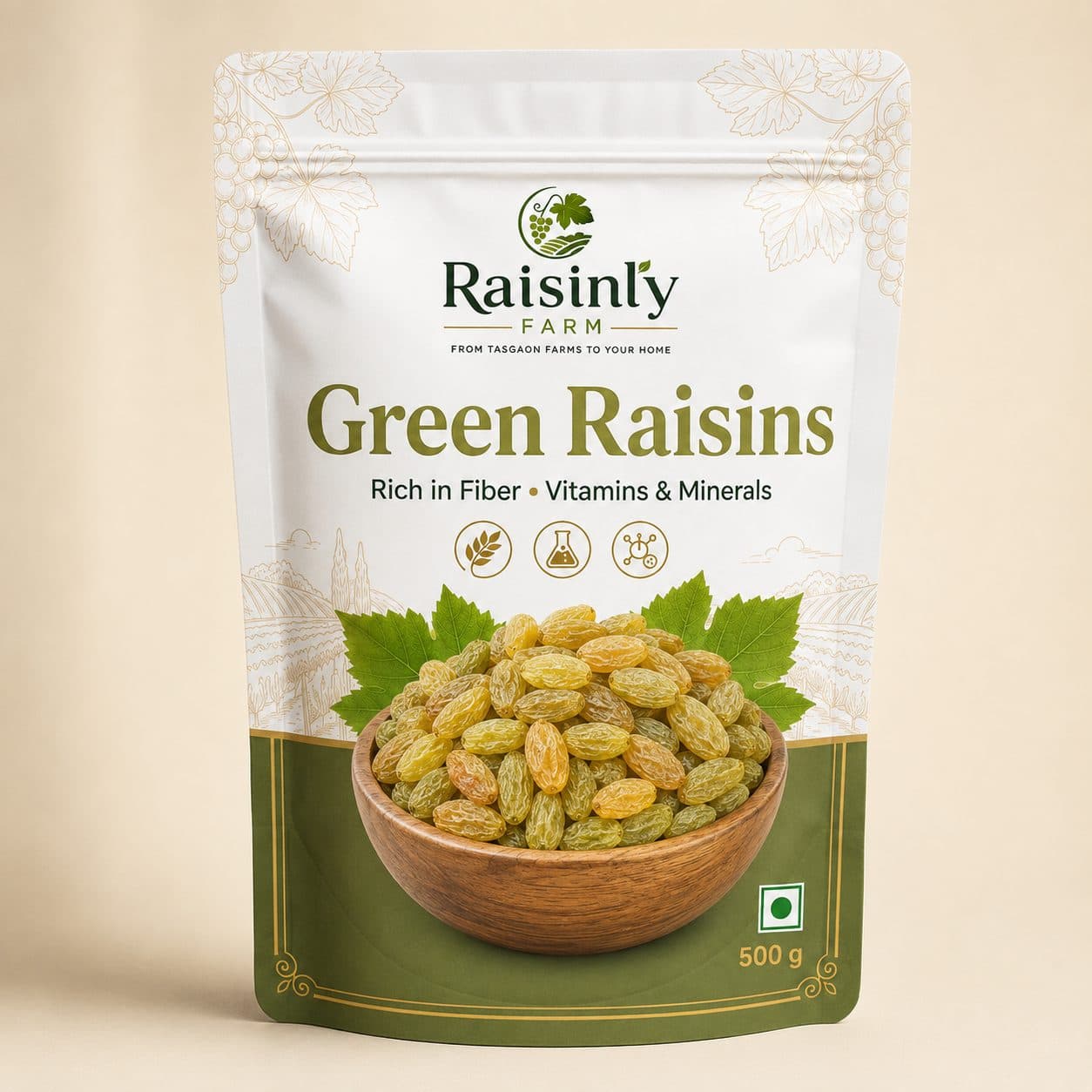
About green raisins
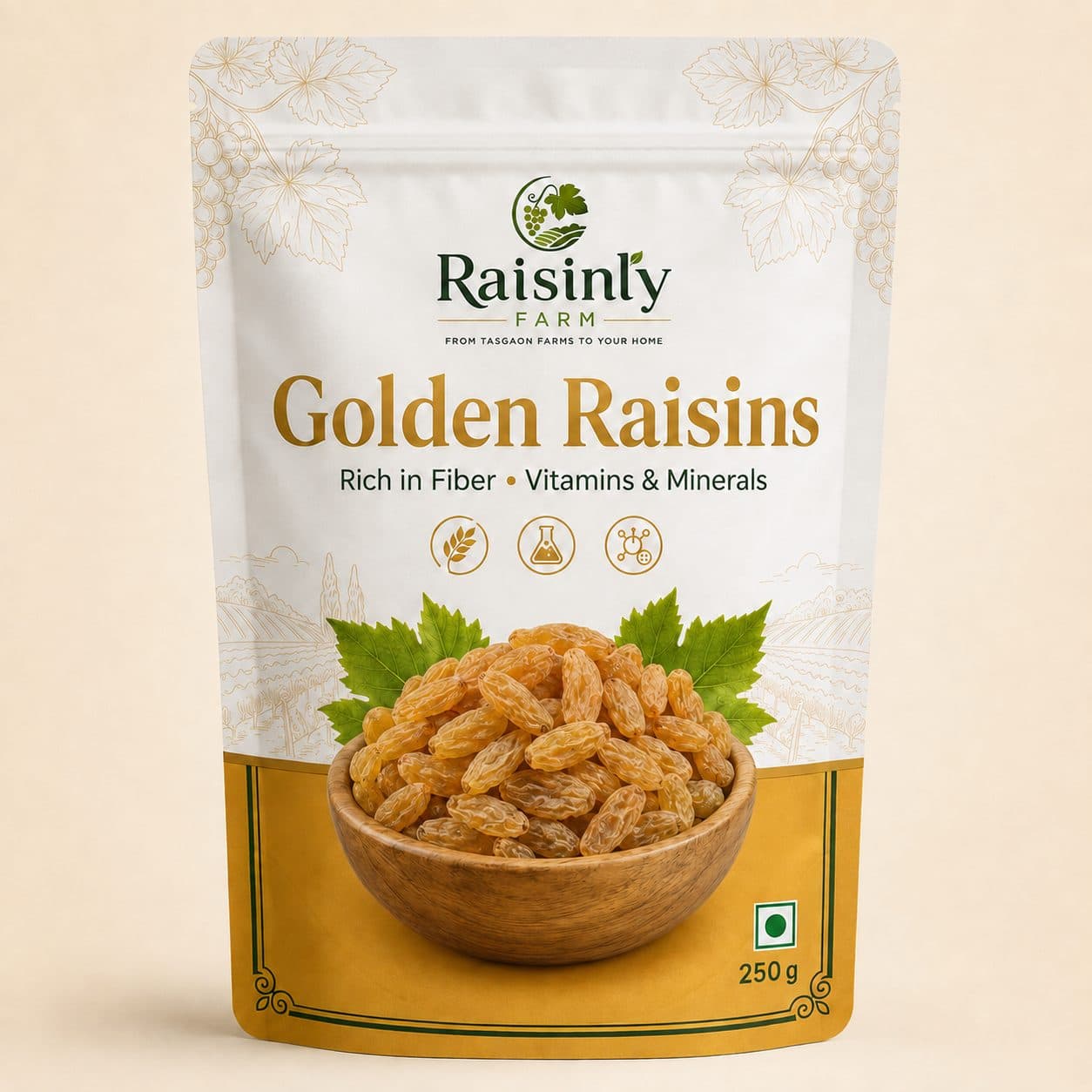
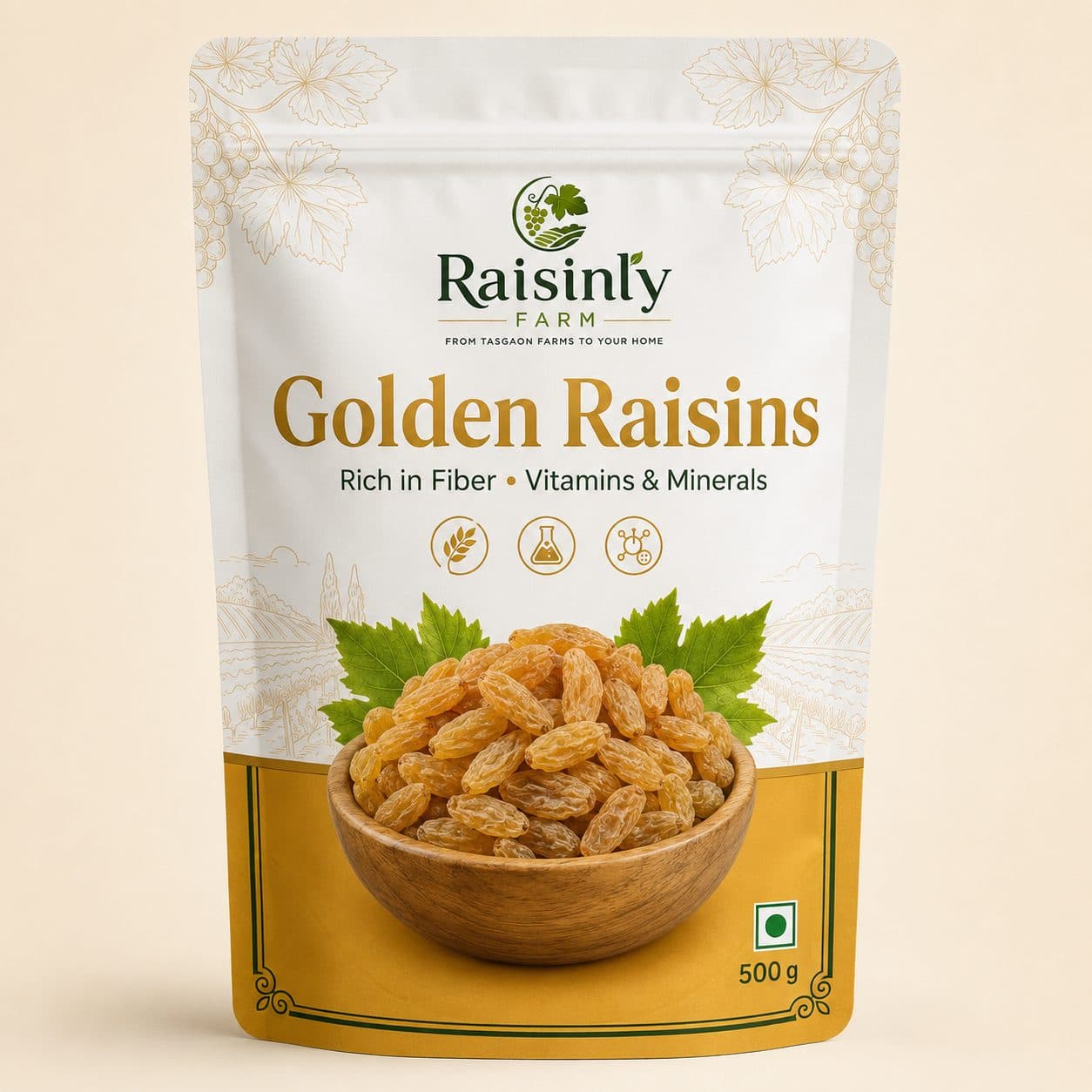
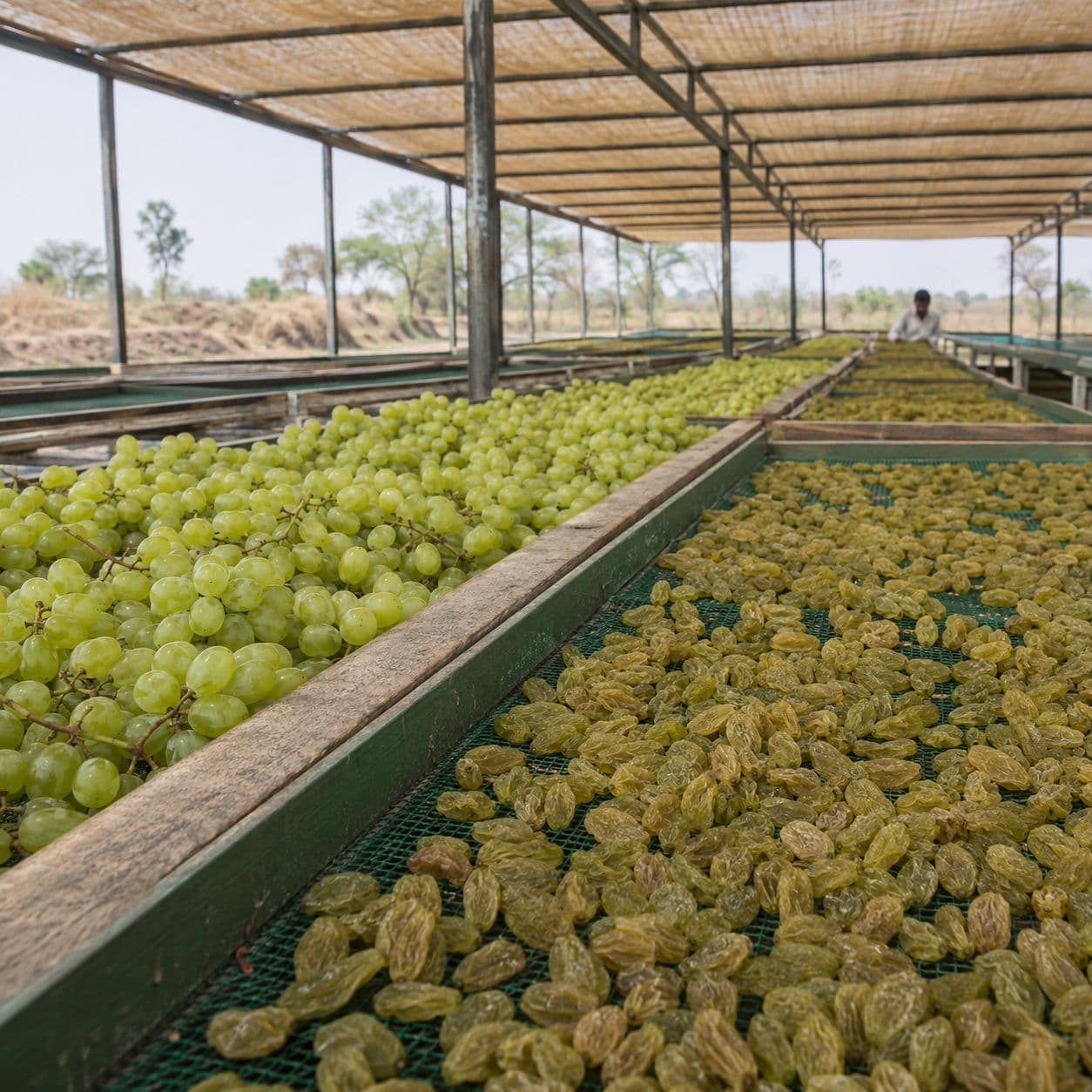
Green raisins are what most Indian kitchens mean by kismis. Thompson seedless grapes, spread on racks under shade net for 12 to 16 days until they hold around 15% moisture, kept out of direct sun the whole time so the skin never browns. That is the entire trick. Put the same grape in open sun and you get a black raisin instead: darker, sweeter, softer. Keep it in the shade and you get this, long and pale and firm.
Packs are 250g at ₹249, 500g at ₹449 and 1kg at ₹849. That works out to ₹996 a kilo on the small pouch against ₹849 on the large one, so the kilo is where the real price sits, and it is what most people buying green raisins online settle on once they have tried a smaller pouch. Green sits a rupee band above black at every size, and the reason is rack space rather than anything mysterious. Shade drying takes longer and racks are the limiting resource in this belt. The current green raisins price set against the other two varieties, with the per kilo working shown, is on the retail price page.
This pouch is premium select, the long grade: 18-22 mm, even pale green through to light olive, dry to the touch, no stems, no stones. Seedless, every piece of it.
The bite is the point. Green kismis are firm and springy where black is soft, and the finish arrives tart before it turns sweet, which is why they cut through a rich milk sweet instead of piling more sugar onto it. They hold their shape through a boil. Add them to kheer in the last few minutes and they swell into whole visible fruit. Add black to the same pot and it half dissolves into the milk. Neither behaviour is better. They are for different jobs.
A good lot looks alive rather than glassy. Pale green, slightly translucent at the edge, with a faint bloom you can rub off between finger and thumb. Squeeze a handful hard and it should fall apart again when you open your fist. If it stays a lump, that lot was packed wet and it will clump on your shelf by July. Colour will drift a little across a handful, and that is normal on any hand sorted stock. Perfectly identical pieces usually mean somebody has been sorting for the photograph.
Where it goes: kheer, sheera, sevaiyan, pulao, biryani, upma, ready mixes, dry fruit chikki, panjiri, and the small bowl of kismis that sits at the edge of a festival thali. If a recipe just says kismis without specifying a colour, this is the one it assumes. Fifteen to twenty raisins is a reasonable portion if you are eating them plain.
If you want sweeter and softer for snacking straight from the jar, or for laddoo and halwa where the fruit cooks down, buy black kismis instead. If you are baking and want the fruit to read light against a pale crumb, the jumbo amber raisins are the ones bakeries ask for by name. All three, plus the seeded types and where sultanas fit, are laid out in our guide to the raisin varieties.
How these raisins are made
Harvest runs February to April across the Tasgaon belt. Bunches come off the vine, get a food grade dip that breaks the waxy bloom on the skin so moisture can leave evenly, and then go onto racks under shade net. Twelve to sixteen days, turned and checked, never in direct sun. Roughly four kilos of fresh grapes come off as a kilo of raisins, which is the number every grower here quotes when you ask why the rate looks the way it does.
Green lots carry sulphur dioxide, used within the permitted limits, and that is what holds the pale colour instead of letting the skin brown down towards black. The ingredient line on this pack states it plainly: dried grapes, permitted preservative (E220). We would rather print that than have you find it on the back label and wonder what else was left out. If you want a raisin with no sulphur on it at all, buy black. Black is not treated, because on black there is no pale colour to protect in the first place.
We buy lot by lot through the season from growers and traders around Tasgaon, Palus, Khanapur and Miraj, rather than committing to one large stock in March and living off it all year. Some of what we buy comes off a rack we have stood next to. Some of it passes through the market yard, and some sits in cold storage before we take delivery. We are not going to print direct from farmers over stock that came through a trader. What we will say is that every lot is squeezed, tasted and metered at our own bench before it is graded, and lots that read wet or smell fermented go back. The belt itself, its season, its market yard and how rates behave through the year are on the Sangli and Tasgaon page.
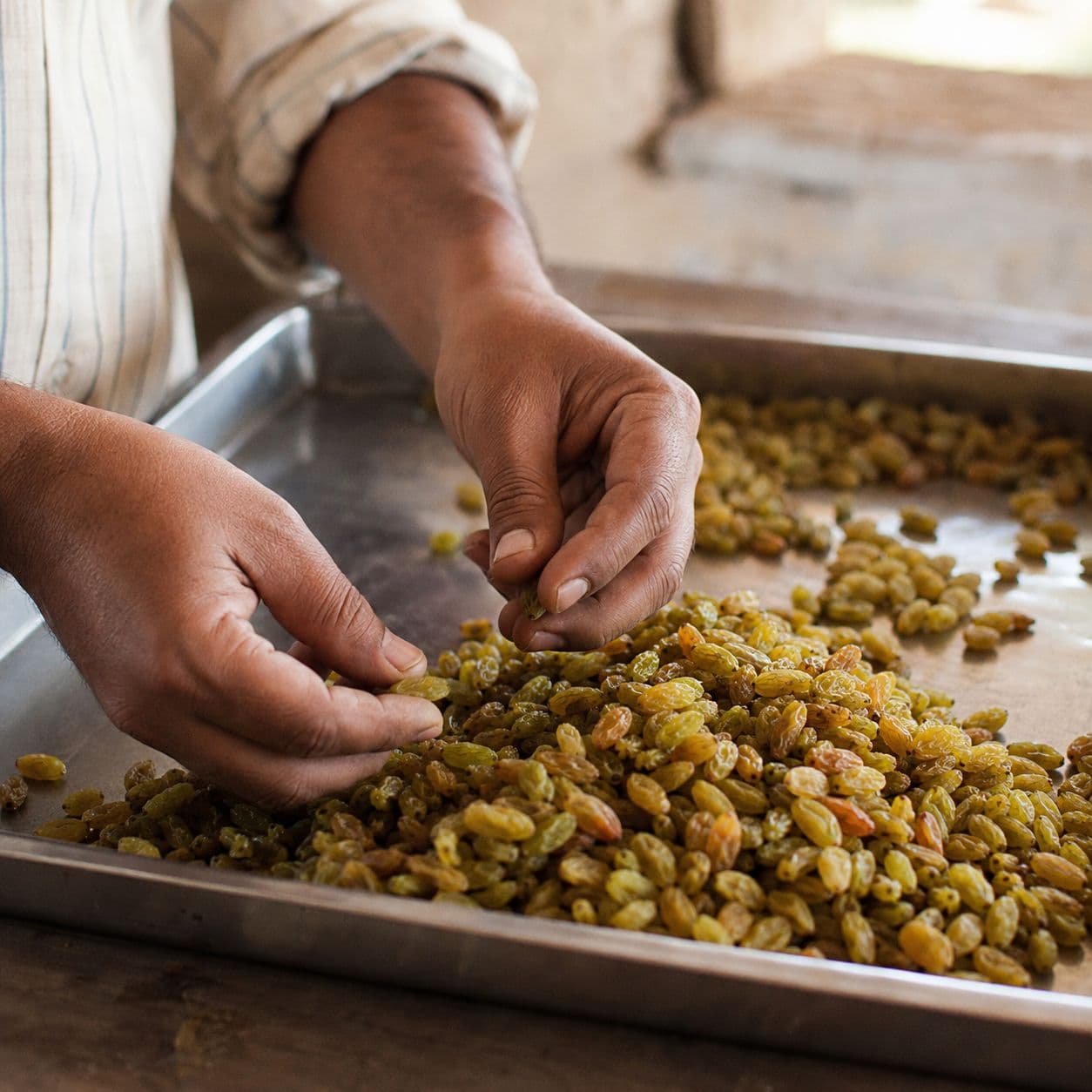
Sorting is by hand: length first, colour uniformity second, moisture third. Those three numbers are what a grade attaches to and what a price attaches to after that. Length is where money actually changes hands, because a four millimetre difference in the average piece is visible across an open 500g pouch on a kitchen counter. Graded stock goes into cold storage so that the moisture stays put and a pouch bought in October eats like one bought in April.
One honest seasonal note. Premium select is the first band to run short after a bad drying week, and a wet spell in March narrows the supply of the long grade for months afterwards. When that happens the spread between premium select and grade A widens, and anybody telling you otherwise has not been to the yard recently.
We pack in short runs instead of sitting on one big lot, so the pouch that reaches you is usually from the current season. We print a packing date on the pack. Most brands give you only a best before. Those are two different pieces of information, and the packing date is the one worth reading. Every pouch is nitrogen flushed and sealed on our own bench in Tasgaon.
How to use green raisins
Green raisins hold their shape through cooking, so they stay visible in the finished dish instead of melting into it. That single property decides almost every use below. They do not need soaking for most Indian recipes. Ten minutes in warm water or milk is enough when you want them plumper, and any longer than that starts to wash out the tartness that made you buy green in the first place.
Kheer and payasam
Add in the last three or four minutes so they plump without breaking down. Fry them in a spoon of ghee first if you want a rounder flavour.
Pulao and biryani
Fry briefly in ghee with cashew until they swell and the skin tightens, then fold through the rice off the heat.
Sheera and upma
Go in with the semolina while it is roasting. They soften as the water goes in and stay whole in the finished bowl.
Breakfast and lunchboxes
Straight into oats, poha, curd or milk. About 15 to 20 raisins is a portion. Firm enough that they do not turn a lunchbox sticky.
Baking
Dust in flour before folding into batter so they stay suspended instead of sinking to the bottom of the tin.
Chikki and dry fruit mixes
The firm bite holds up against roasted nuts and jaggery, where a softer raisin would go pasty in the mix.
Bakers usually reach past green for anything where the fruit shows on the crust, because pale green goes drab against a golden crumb. The amber grade holds its colour instead, and the two are compared piece by piece in green kismis against the amber jumbo grade.
How to store them
Keep the pouch closed and press the air out before you reseal it. An airtight glass or steel jar in a dark cupboard is better still. Away from sunlight, away from the stove, and away from anything strongly scented, because raisins take on the smell of a shelf faster than most dry goods do. Stored that way they stay good for nine months from the packing date printed on the pack.
Humidity, not age, is what ruins raisins in an Indian kitchen. Sugar at the surface softens when the air is wet, the pieces stick to each other, and you end up prising a solid block out of a jar. Green clumps later than black does because it carries less free sugar, but June to September will get to it eventually if the jar is not airtight.
The label carries what the rules require and what you would want to check anyway: net quantity, the ingredient line, packing date, best before, batch code, our FSSAI licence number and the green vegetarian mark. Ingredients read dried grapes and permitted preservative (E220). There is no added sugar, no oil and no glazing agent on this product. Country of origin is India and the sourcing region is the Sangli and Tasgaon belt in Maharashtra. Nutrition per 100g is printed on the back of the pouch and repeated further down this page.
For longer keeping, the fridge is enough. Raisins do not need a freezer and freezing only makes them awkward to portion. If you buy a kilo in April and want it to last through the monsoon, decant a week's worth into a small jar and keep the rest sealed and cold rather than opening the same pouch twenty times.
White crystals on the surface are crystallised natural sugar, not mould. They wipe off, and they dissolve the moment the fruit meets heat. Mould is a different thing entirely: fuzzy, greyish, and it smells sour before you can see it. If a pack ever arrives like that, photograph it and send it to us. We replace it without argument and we pull the rest of that batch off the bench.
Grades explained
Grade moves the price of green raisins more than the variety itself does. Three things set it: length, how far colour drifts across a handful, and moisture. Grade names in this trade are convention rather than law, so two suppliers can both write grade A on a bill and ship visibly different fruit, and neither of them is strictly lying. What follows is the ladder we buy and sell against, measured on a draw pulled from inside the lot rather than off the top layer. This retail pouch is premium select.
Green vs black vs golden
The two varieties people actually agonise over are these two, and the honest answer is that most kitchens want a jar of each. Drying method, taste, price and the dishes each one belongs in are worked through in black raisins compared with green. If you are buying 15kg or more for a repacking line, a retail counter or a food unit, the length bands, tolerances, carton formats and quotation basis are set out on bulk green kismis. Rates there are quoted on the day of enquiry, ex-Tasgaon, and held for 48 hours.
Product information
Nutrition per 100 g
Indicative values for dried seedless green raisins. Actual values vary by lot and season.
Questions buyers ask
Questions about orders, delivery, returns or wholesale rates are answered on the full FAQ page.