

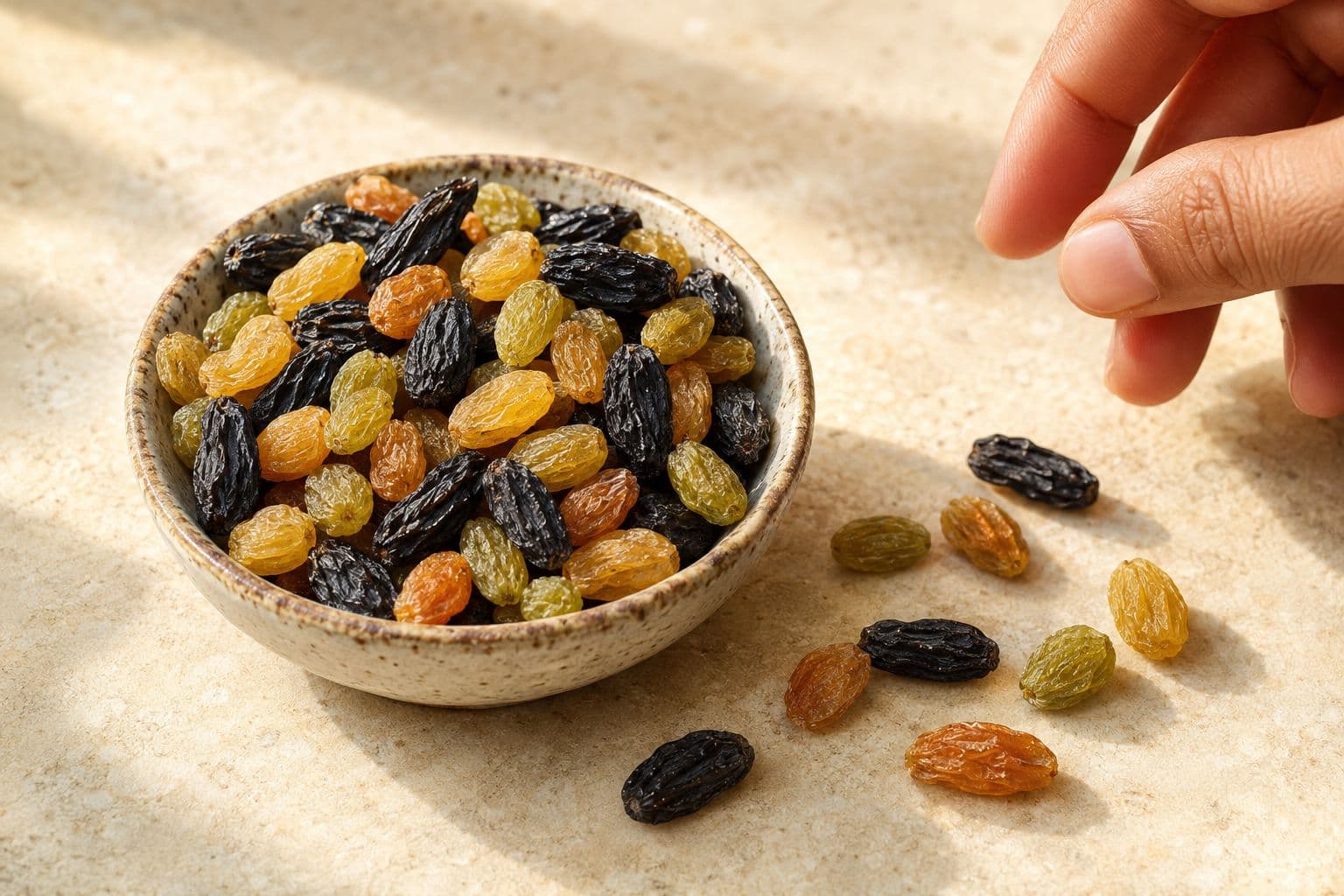
All three are dried grapes. The split between raisins and sultanas is a naming convention from Britain and Australia, not a grade: sultanas are the pale golden dried fruit of the Sultana grape, the same variety India calls Thompson seedless. Currants are genuinely different, dried from the tiny Black Corinth grape. In India, buy golden raisins wherever a recipe says sultanas.
The short version
Raisins vs sultanas vs currants at a glance
Three words, three products on a British shelf, and a lot of confusion in recipe comments. The short version: all three are dried grapes, but they come from two different grape varieties and three different naming traditions.
Raisins and sultanas are the same species and very often literally the same grape. Currants are not. That single fact explains most of the substitution advice further down this page. Where the Indian varieties sit against each other is a separate question, and it is answered on the types of raisins guide.
Raisins, sultanas and currants compared.
The names describe a country, not a quality grade
None of these three words tells you anything about how good the fruit is. They tell you where the pack was written. A British recipe writer and a Californian packer use overlapping words to mean different things, and an Indian shopkeeper uses none of them.
In Britain, Ireland and Australia
Raisin means a dark dried grape, usually large and sweet. Sultana means the pale golden seedless one, which is the everyday baking fruit in those kitchens. Currant means the tiny black one. Three separate bins on the shelf, three separate words, and a recipe that says sultanas expects the golden one specifically.
In the United States
Everything is a raisin with an adjective attached. Thompson seedless raisins are the dark default, golden raisins are the pale ones, and the tiny black ones are sold as Zante currants. American recipes rarely say sultana at all, which is why an American and a British recipe for the same fruit cake can look like they use different fruit when they do not.
In India
The word is kismis, and colour does the sorting: green kismis, black kismis, golden or yellow kismis. Sultana is not a trade term in Sangli or anywhere else in the belt. Ask for sultanas at an Indian dry fruit counter and you will be handed golden raisins, which is the correct answer even if the shopkeeper cannot explain why.
What a sultana actually is
The sultana grape and the Thompson seedless grape are one variety. Its proper name is Sultanina. Turkey grows it and dries it into sultanas. Australia does the same. California dries it and calls the result Thompson seedless raisins. Maharashtra dries it and calls the results green, black and golden kismis. One grape, several names for the dried fruit, depending on which side of which border it dried on.
What makes a sultana pale rather than brown is what happens before drying: a dip to break the wax on the skin, a sulphur step to stop the fruit browning, and then drying away from direct sun. That is the same logic behind our golden raisins. Turkish sultanas often run a shade lighter and slightly sharper because of the climate and local dipping practice, but a good jumbo golden lot from Tasgaon sits in the same place on a plate.
So when someone tells you a sultana is a different fruit from a raisin, they are describing a shelf, not a vine. The processing route that turns a pale seedless grape into pale seedless dried fruit is laid out step by step in our production guide, and it is the route we run every February to April.
Currants come from a genuinely different grape
Currants are the outlier. They are dried from Black Corinth, a small ancient grape grown mostly in Greece, and the English word currant is a worn down version of Corinth. The berries are tiny, five to eight millimetres, and they dry to something almost black with a tangy, concentrated, faintly winey flavour that no raisin has.
They have nothing to do with blackcurrants or redcurrants. Those are a different plant altogether, sold fresh or as jam, and the shared name is an accident of English that causes real errors in recipes every Christmas.
India does not produce currants at any scale, and we do not stock them. If a British recipe calls for them you are either buying imported stock at a premium or substituting, and the substitution needs a small adjustment rather than a straight swap.
Why no Indian pack says sultana
You will not find an Indian pack labelled sultana, and there is nothing hidden in that. Indian trade grew its own vocabulary around kismis and colour, and the export buyers Indian raisins mostly serve purchase against grade names like jumbo, premium select and grade A rather than against European fruit names. Nobody in the Tasgaon market yard has ever quoted us a rate for sultanas.
This matters when you read a label. A pack that does say sultana on an Indian shelf is almost always imported, usually Turkish, and priced for the freight and the import duty rather than for being a better raisin. It is a different origin with a different name for a similar product. If you are choosing between the Indian varieties instead, green against golden is the comparison that actually decides something.
If a supplier quotes you Indian sultanas at a premium over Indian golden raisins, ask what the grade is and what the berry length is. Nine times out of ten the answer describes a jumbo golden lot with a fancier word on the invoice. Current retail pricing across all three varieties we pack is on the pack by pack rate page, so the comparison takes a minute.
What to buy when a recipe says sultanas
Substitution is straightforward for two of the three and imperfect for the third.
Substitutions for Indian kitchens.
The currant swap in detail
The lemon in that last row is not a garnish. Currants are noticeably more acidic than any Indian raisin, and a fruit cake made with black kismis alone tastes flat and oversweet against the original. A teaspoon of lemon juice, or the zest of half an orange stirred into the soaking water, gets most of the way there.
Buy the smallest kali kismis you can find for this job. A jumbo black raisin chopped in three is still not a currant, because you get cut edges that bleed colour into the batter, but small whole fruit chopped once behaves reasonably well.
How the three behave in the oven
The differences show on the cut surface more than on the tongue. Golden raisins plump and hold that volume through the bake, and they stay golden. Against a pale crumb they read as fruit. Sultanas do exactly the same, because they are the same thing.
Black raisins darken further, and any piece sitting proud of the crust caramelises fast and can look scorched. In a date cake or a spiced bun nobody minds. In a plain tea loaf it looks like a fault. Currants nearly vanish into a dark crumb and deliver flavour without visible fruit, which is precisely what a traditional Christmas cake is after.
Bakeries buying at volume settle this product by product rather than by preference, and they change variety between the interior and the top of the same item. Prep, dosage and moisture guidance for each variety is in our baking guide.
When a specification sheet says sultana
Specification sheets from overseas buyers, and from Indian bakery chains that copied an overseas template years ago, still say sultana. We read that line as a request for jumbo golden and we write that on the quote rather than letting the word sit there unexamined. Twice we have had a buyer come back and say they genuinely wanted Turkish stock, which we do not supply, and it is better to find that out before dispatch.
What actually needs agreeing is berry length or count, moisture, the colour band, the sulphur declaration and the defect tolerance. Those five decide whether a lot passes on arrival at your unit. The fruit name on the sheet decides nothing at all.
Minimum bulk order is 15kg. Samples are 250g, charged at cost and adjusted against your first order. Rates are quoted on the day, with 48 hour validity, because arrivals at the Tasgaon market yard move them week to week. Packing formats and grade notes written for bakery buyers are on raisins for bakeries.
Frequently asked
Raisin is the general word for any dried grape. Sultana is the British and Australian name for the pale golden seedless one, made from the Sultana grape, which is the same variety India grows as Thompson seedless. The difference is naming convention and drying treatment, not a different fruit.
The Indian equivalent of a sultana: jumbo grade, amber and plump, in 250g, 500g and 1kg packs.
Shop golden raisins